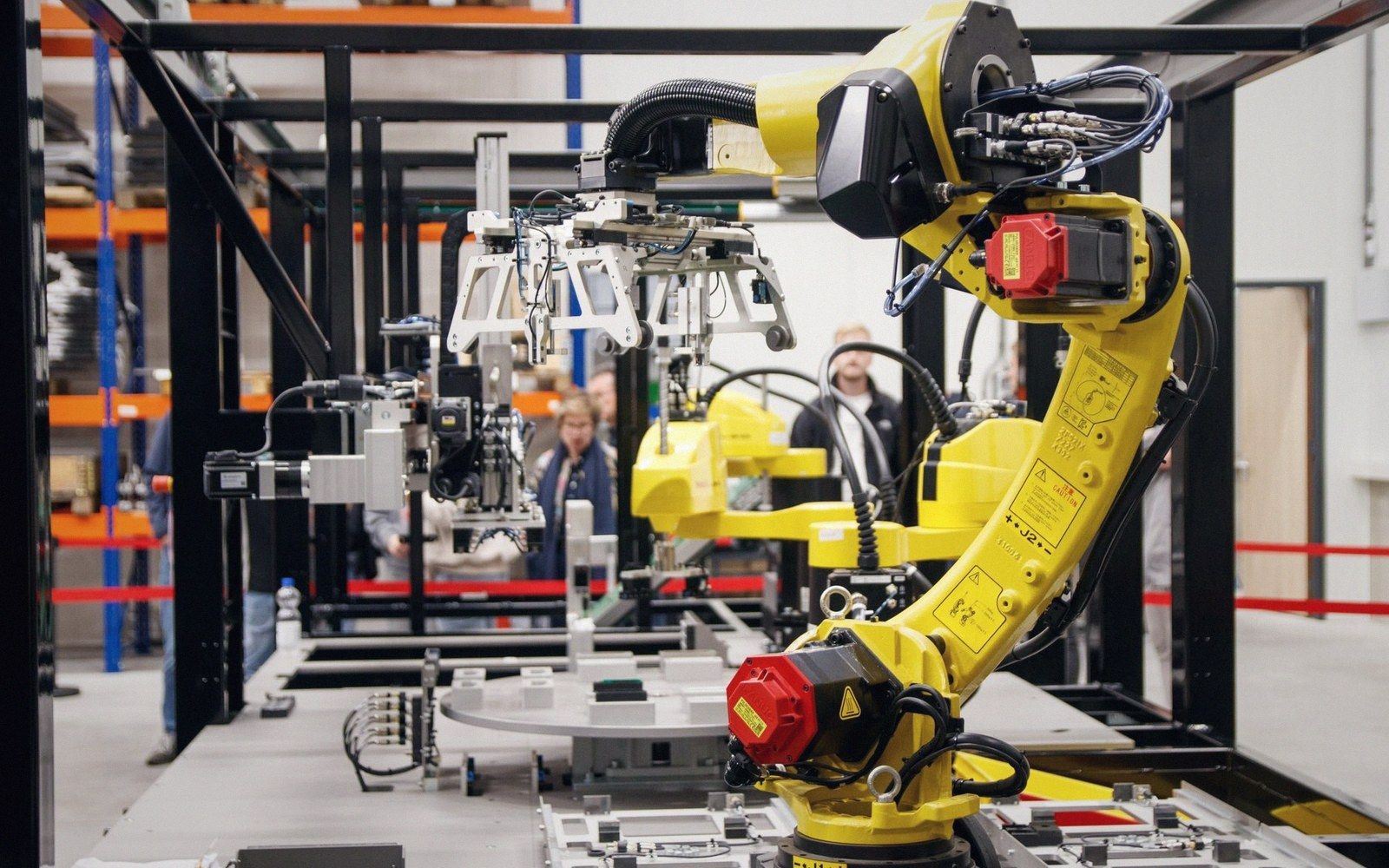
The subject
A machine whose whole purpose is to return to the same point in space, over and over, for years.
Six joints and a promise about where the tip will be. This is about how that promise is made, and what it costs to keep.
Photo: Freek Wolsink / Pexels
The ground fact
An industrial arm does not know what it is holding, where it is, or that you are standing behind it. It knows six angles and the order it was given.
Everything else — the accuracy of the reach, the grip that holds, the fence that keeps the two of you apart — is engineering built around that ignorance. Six things have to be settled before an arm is worth bolting down. These are those six.
The six
Six joints. Six things to settle.Repeatability
Returning to the same point, not the right one.
5 entries02Six Axes
What each joint contributes, and why six.
5 entries03The Pendant
How a path actually gets recorded.
5 entries04The Hand
Holding something you cannot feel.
5 entries05Singularity
Where the maths runs out.
4 entries06The Cell
The fence, and what it is really for.
5 entriesRead first
The distinction the rest of the site rests onRepeatability
Repeatability is not accuracy
An arm quoted at ±0.03 mm will return to the same wrong place all day. Repeatability is agreement with itself; accuracy is agreement with the world, and almost every published figure is the first one.
- Repeatability
- The scatter of actual arrival positions around a single commanded point.
- Accuracy
- Agreement between the controller’s model of where the tool is and where it physically is.
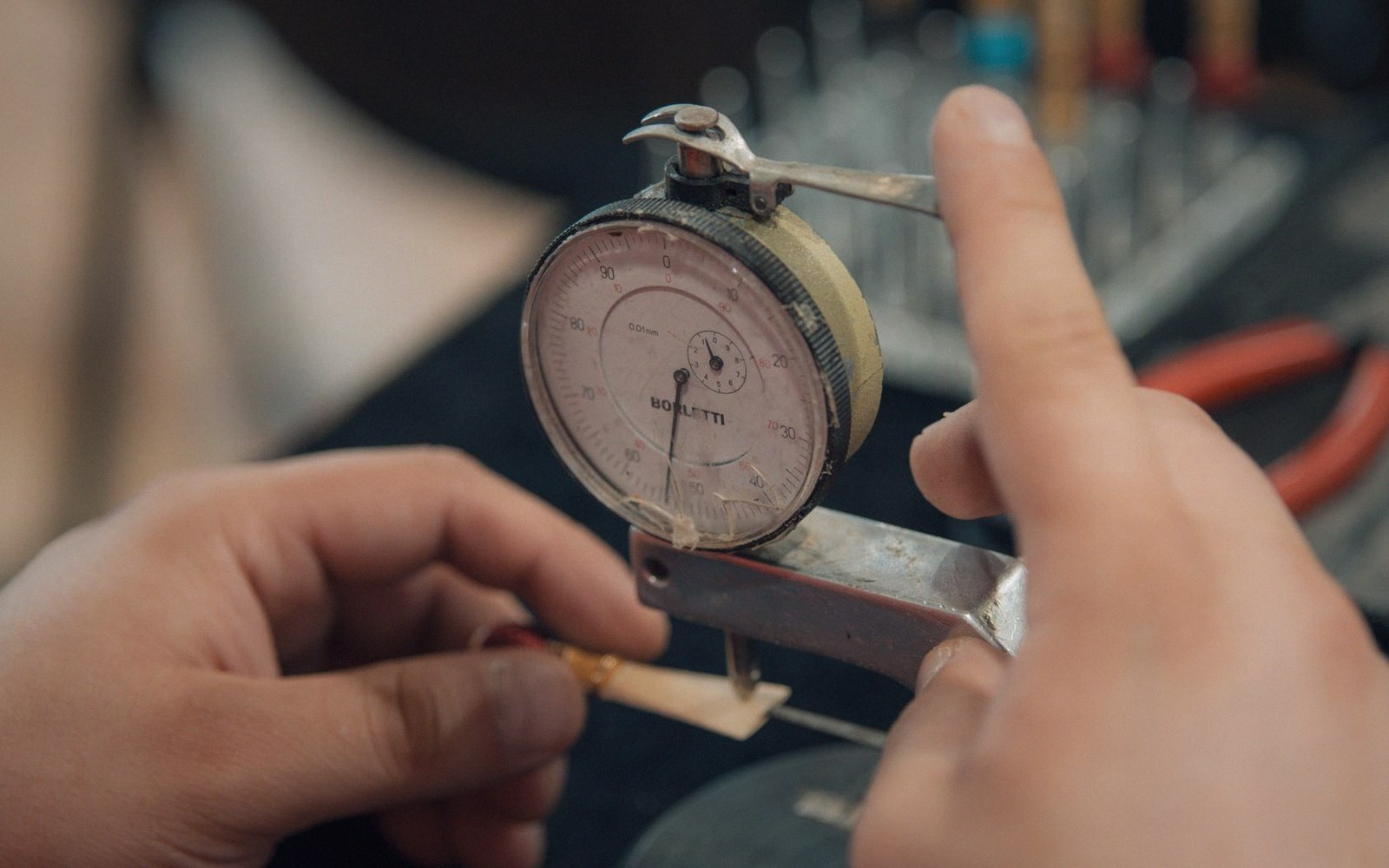

Why six
Three to place a point anywhere in reach, three more to arrive at any angle. Fewer and orientation is constrained; more and the solution stops being unique.
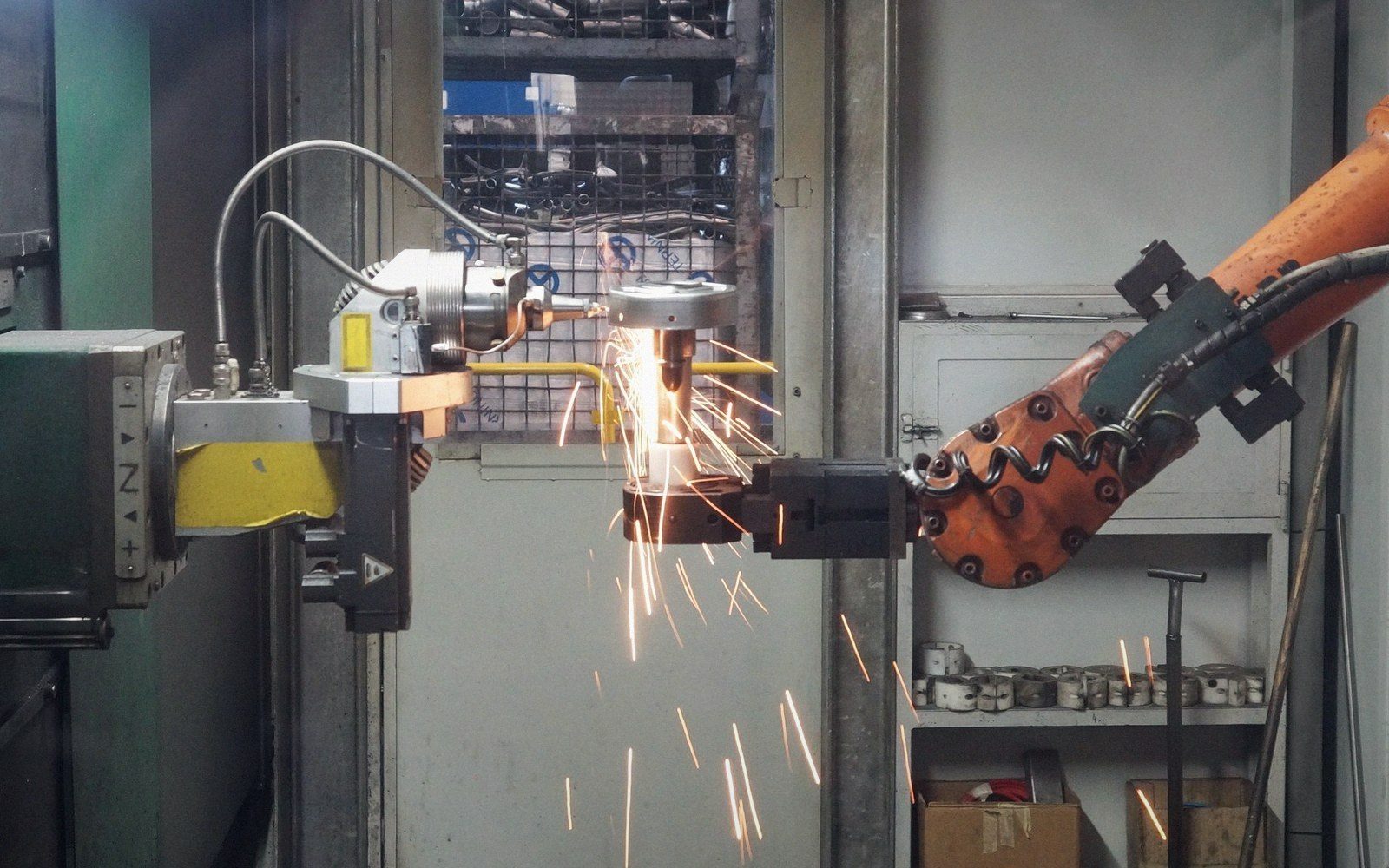
Where the maths runs out
In certain poses two axes line up and the arm loses a degree of freedom; the controller demands infinite speed to continue and stops instead.
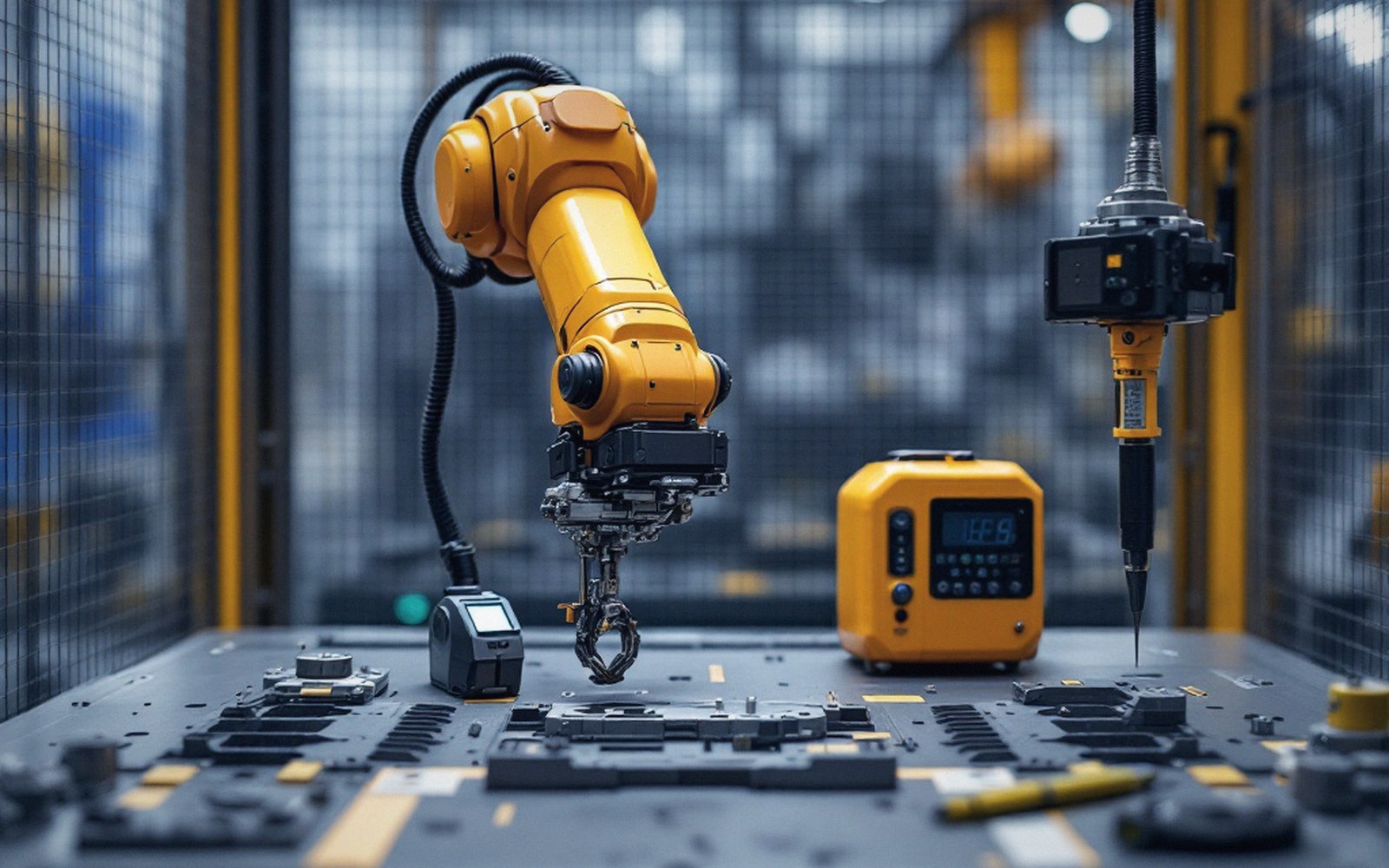
The fence is part of the machine
The guarding is not an accessory bolted on afterwards; the cell is designed as one system and the arm's speed and reach are set by it.
Every entry states the tolerance it turns on — a repeatability figure, a payload, a reach, a cycle — so claims can be compared rather than admired.
The rule this site is written to