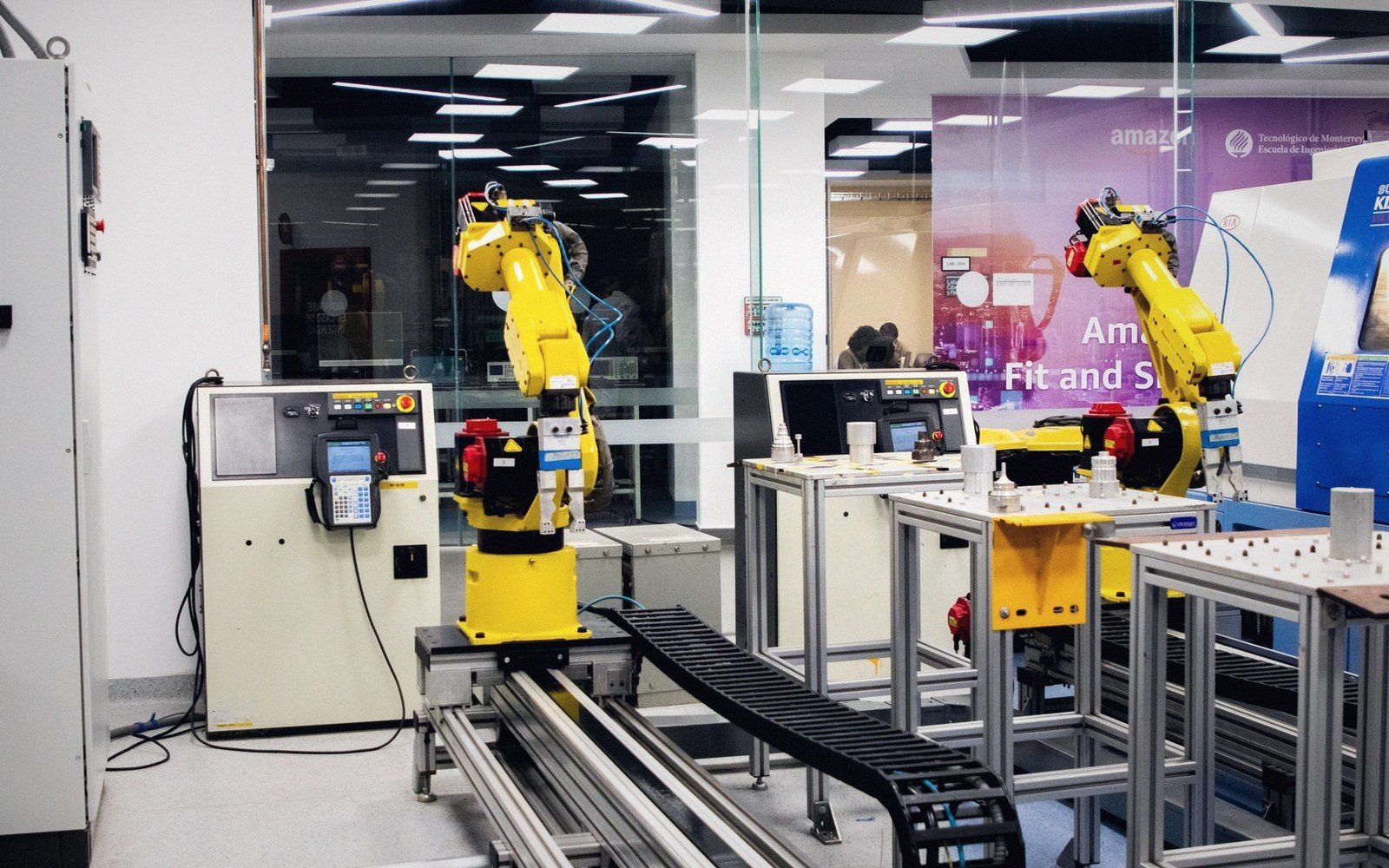
Holding what you cannot feel
A two-finger gripper has no idea what it is holding. Everything the arm knows about its load is inferred from position, current draw and whether the part arrived at all.

§ 1What the gripper actually knows
A human hand is covered in mechanoreceptors — pressure, vibration, temperature, shear. Close your fingers around a glass and you are running a continuous negotiation: grip tighter as the glass slips, ease off before it shatters. A robot gripper has none of that. It closes until it reaches a programmed position or a preset force limit, and then it stops. Stopped is the entire signal.
Electrically driven grippers infer grip force from motor current. Pneumatic grippers — still common, because shop air is cheap and fast — work at a set pressure and offer almost no feedback at all beyond a proximity switch that confirms the jaw reached its target. The part could be absent, shattered or a different size by a few millimetres, and the jaw would still close and trip the same sensor.
Position is therefore the primary language. A gripper set to close to 42 mm will detect a missing part only if the jaws travel past 42 mm and something downstream — a sensor, a vision system, a torque alarm — notices the anomaly. That detection is not built in; it is designed around the gripper, deliberately, by a human who understood the failure mode before it happened.
§ 2How engineers compensate
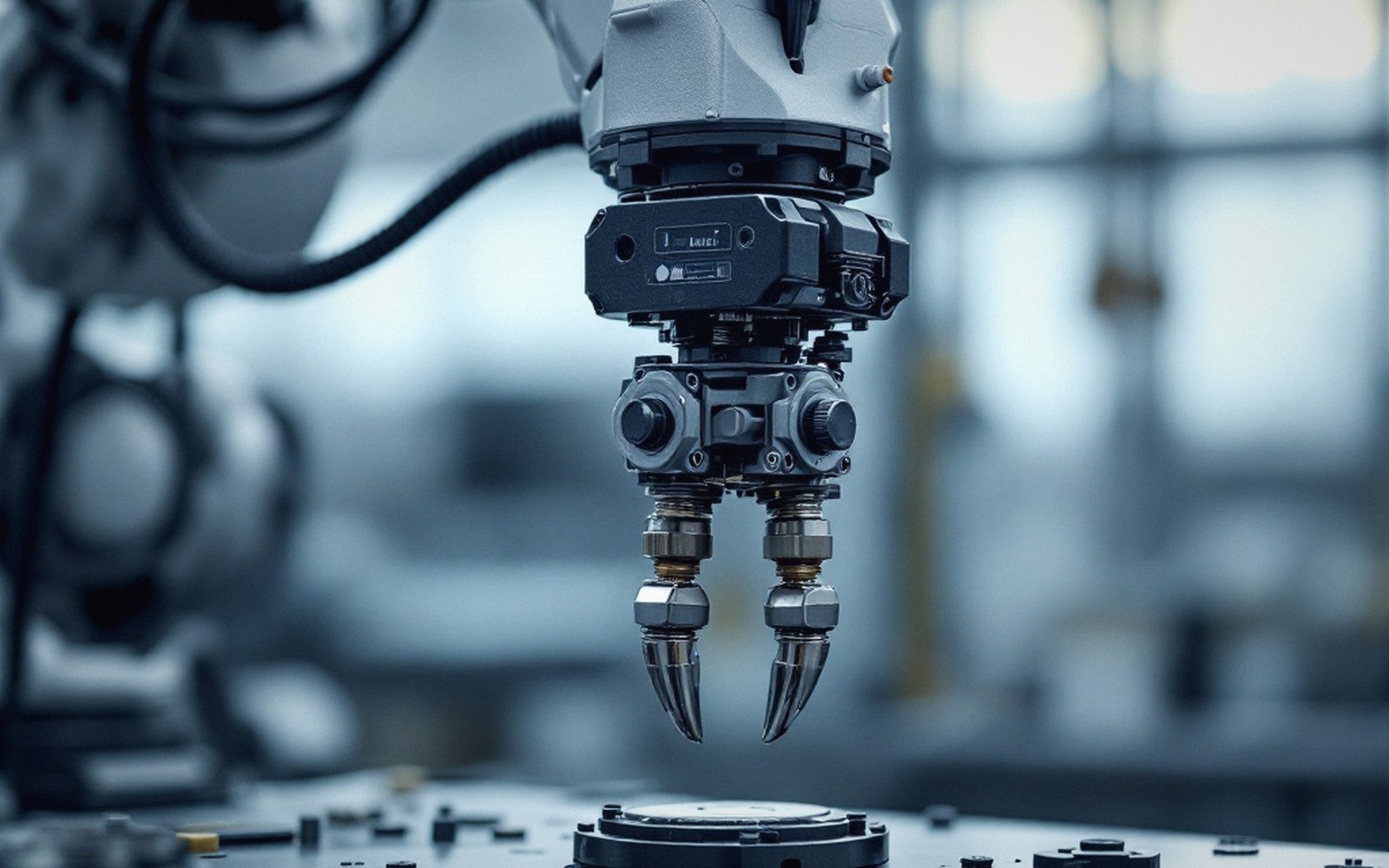
Because the gripper cannot feel, the cell has to see. Vision systems confirm part presence, orientation and rough geometry before the arm commits to a pick. A 2D camera above the infeed belt tells the arm where the part is; a force-torque sensor mounted between the wrist and the gripper tells the controller how hard the arm is pushing during insertion. Neither is the same as touch, but together they span most of what touch would catch.
Compliance — deliberate mechanical springiness built into the end effector or its mount — handles the rest of the ordinary variation. A part that is two-tenths of a millimetre out of position deflects the compliant mount rather than jamming the process. The spring absorbs the error that the gripper cannot sense. This is passive intelligence: the geometry does the work because the electronics cannot.
Force-torque sensing at the wrist goes further. A six-axis load cell between the flange and the tool reads forces and moments in real time. The controller can be programmed to back off if insertion force climbs past a threshold, to spiral-search for a chamfer, to stop if something feels wrong. "Feels" is a euphemism — it is a voltage crossing a threshold — but the behaviour it produces is recognisably tactile in effect if not in mechanism.
Vacuum grippers, which rely on suction rather than mechanical fingers, add one more inference layer: the vacuum level in the cup. A drop in vacuum means the seal is broken, which usually means the part has dropped or was never picked up. It is crude — a single number summarising the entire contact surface — but it is at least a continuous signal rather than a binary switch. Vacuum against fingers covers in detail where suction succeeds and where it fails entirely.
§ 3What this means for the cell designer
Every gap in the gripper's perception has to be closed somewhere else in the system — with sensors, with vision, with downstream checks that reject a bad part before it becomes a bad assembly. The gripper's ignorance is not a flaw to be fixed later; it is a given to be designed around from the start. The arm will deliver exactly what the gripper thinks it has picked up, and the gripper thinks what the sensors and the current draw and the jaw position tell it to think. Get those signals wrong or absent, and the arm will hand a missing part to the next station with the same confidence it would hand a perfect one.
Citizen Robot is an independent publication about robot engineering. It is not a vendor, integrator or safety authority, and nothing here constitutes safety guidance or a specification for any system.
Force-torque sensing at the wrist goes further.