Teaching a path
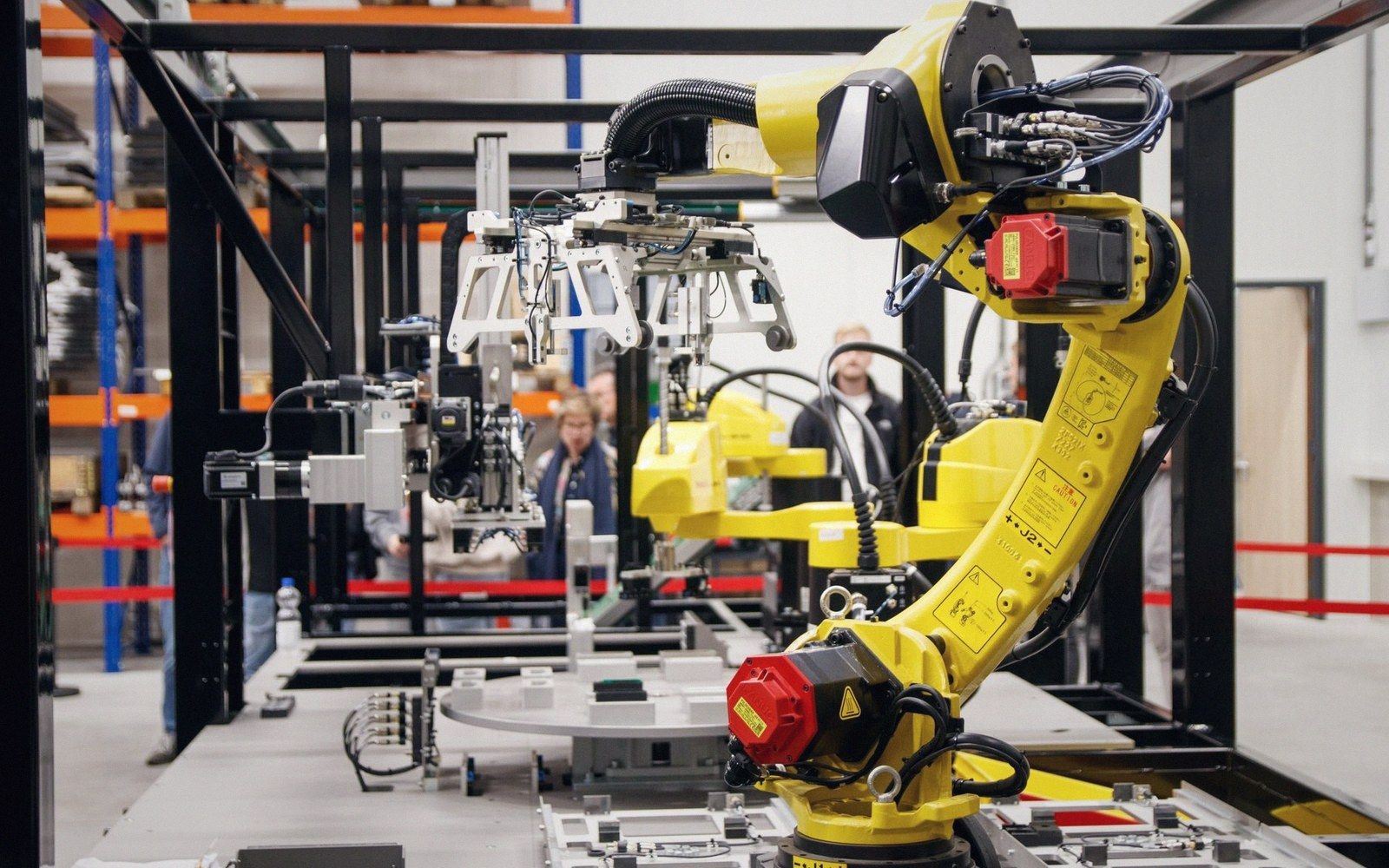
The pendant is not a drawing tool. You move the arm to where you want it, and the controller remembers where it ended up.
§ 1What recording actually captures
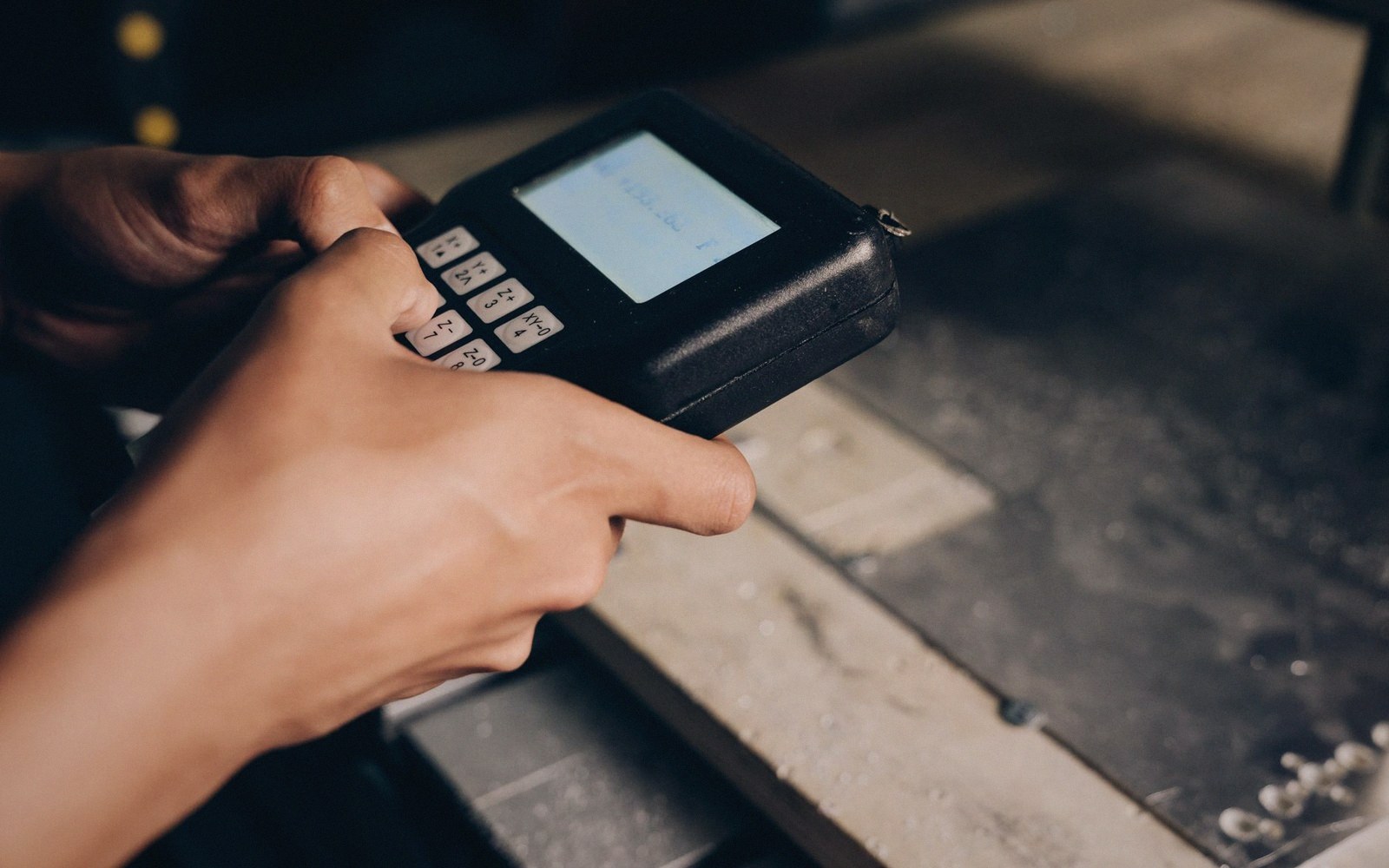
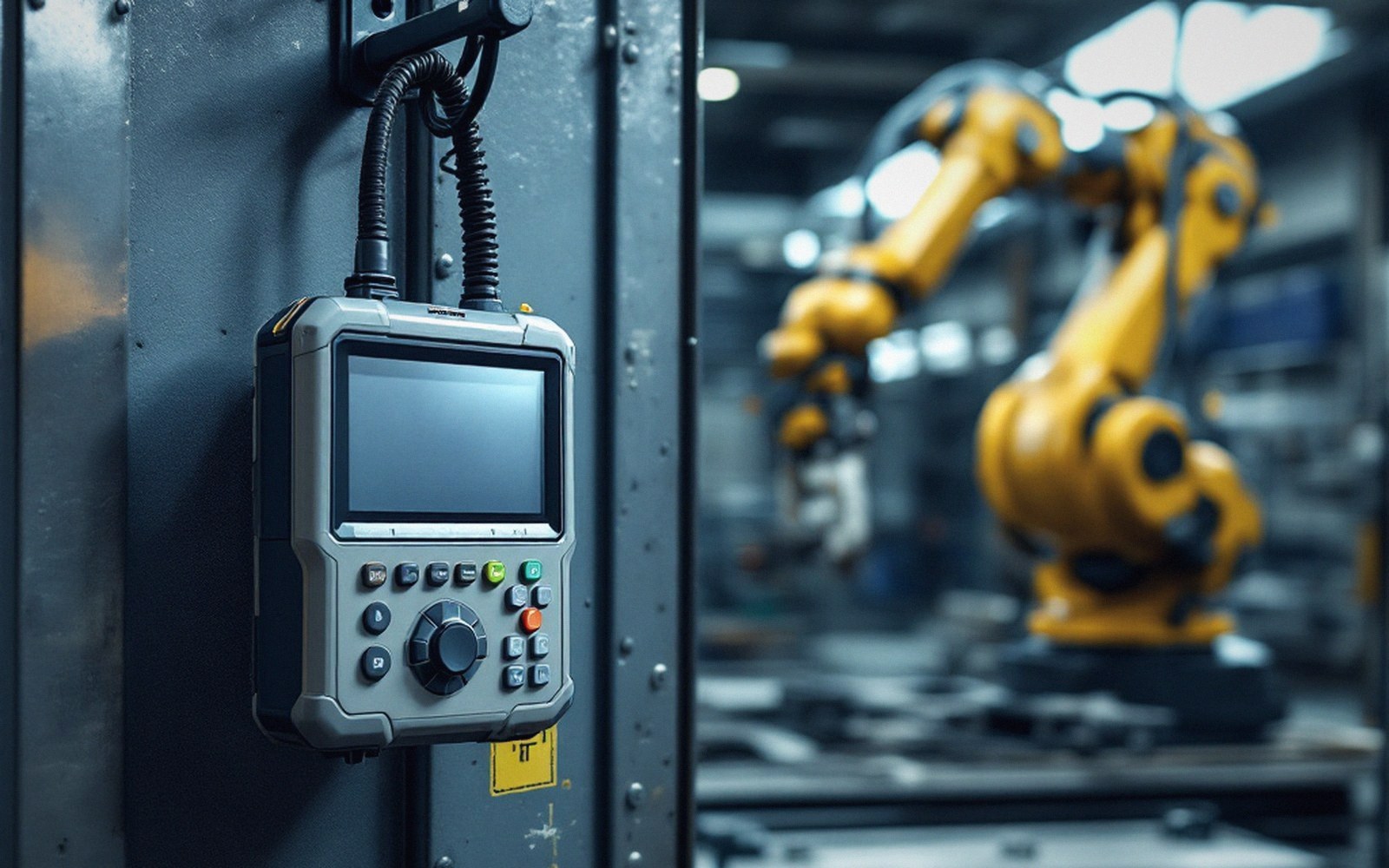
A teach pendant is a handheld device — usually a small screen with a keypad and a deadman switch — that lets a programmer jog the arm joint by joint, or in Cartesian coordinates, until the tool is sitting exactly where it needs to be. Press the record key and the controller writes down the current joint angles. That is the waypoint: a set of six numbers, one per axis, not a geometric description of the space the arm occupies.
This distinction matters more than it seems. The program is a list of poses, and the motion between them is something the controller calculates later, at run time. When you teach two points, you are not drawing the line between them — you are handing the machine two addresses and letting it work out the route. Whether that route is a straight line in space or a smooth arc through joint space depends on the move type you select when you store each point: a joint move will take the fastest path through angle-space, which is rarely a straight line in the room, while a linear move will hold the tool centre point on a geometric straight line, which costs more computation and more care near singular poses. Both options are valid; the programmer has to know which one the application demands.
§ 2The gap between teaching and running
Teaching is slow, deliberate work. The programmer jogs at a fraction of operating speed — inching the arm toward a surface, checking clearances visually, testing the grip. What gets stored is a snapshot of where the arm sat when the record key went down. Any error in that judgment — the tool tilted a degree too far, the approach point two millimetres short — is faithfully preserved and faithfully repeated at full speed in production. The arm has no opinion about whether the pose is correct. It returns to that set of joint angles with the same indifference every cycle.
This is why repeatability is not accuracy: once a point is taught, the machine will return to it with very high precision. But if it was taught wrongly, high precision is precisely the problem. The error compounds wherever that point is referenced, and correcting it means going back to the pendant and teaching it again.
The path is also taught point by point, which means the space between waypoints is only as safe as the motion the controller generates to bridge them. A programmer who teaches an approach point and a contact point without thinking about the arc between them may find the arm clips a fixture on the first full-speed run. The dry run — the same path executed at a fraction of speed, with the programmer's hand on the deadman — exists specifically to catch this before it matters.
§ 3What the pendant cannot tell you
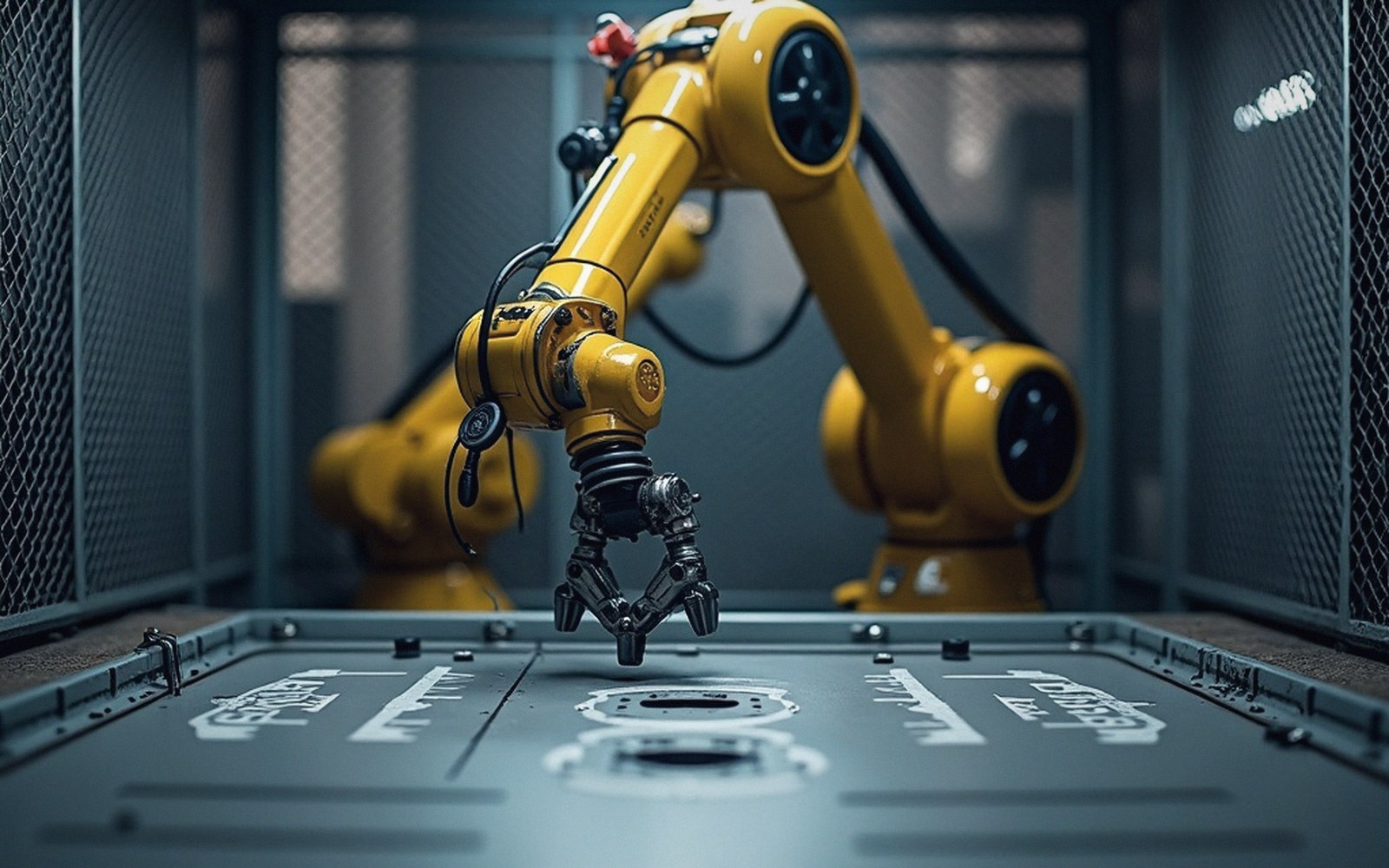
There is no feedback from the work. The programmer watches with their eyes, judges clearance by feel and experience, and decides when the pose is good enough to store. Nothing in the pendant confirms whether the tool is oriented correctly for the process, whether the grip will be stable, or whether the approach vector will cause problems at a different point in the joint range. Those judgments are made by the person standing there.
This is why teaching a complex path is skilled work, not clerical work. The pendant is simple to operate; knowing what to teach, in what order, with which move types, at which blend radii and speeds, is what takes time to learn. A program that runs cleanly at speed — smooth transitions, no wrist flips, consistent contact — reflects decisions made carefully at low speed with a handheld box and a practiced eye. The machine produces the consistency. The person produces the path.
--- Citizen Robot is an independent publication about robot engineering — not a vendor, integrator or safety authority.
Those judgments are made by the person standing there.