What the Figure Excludes
The repeatability spec on the datasheet was measured under conditions your cell will never reproduce.

§ 1The Three Asterisks Nobody Prints
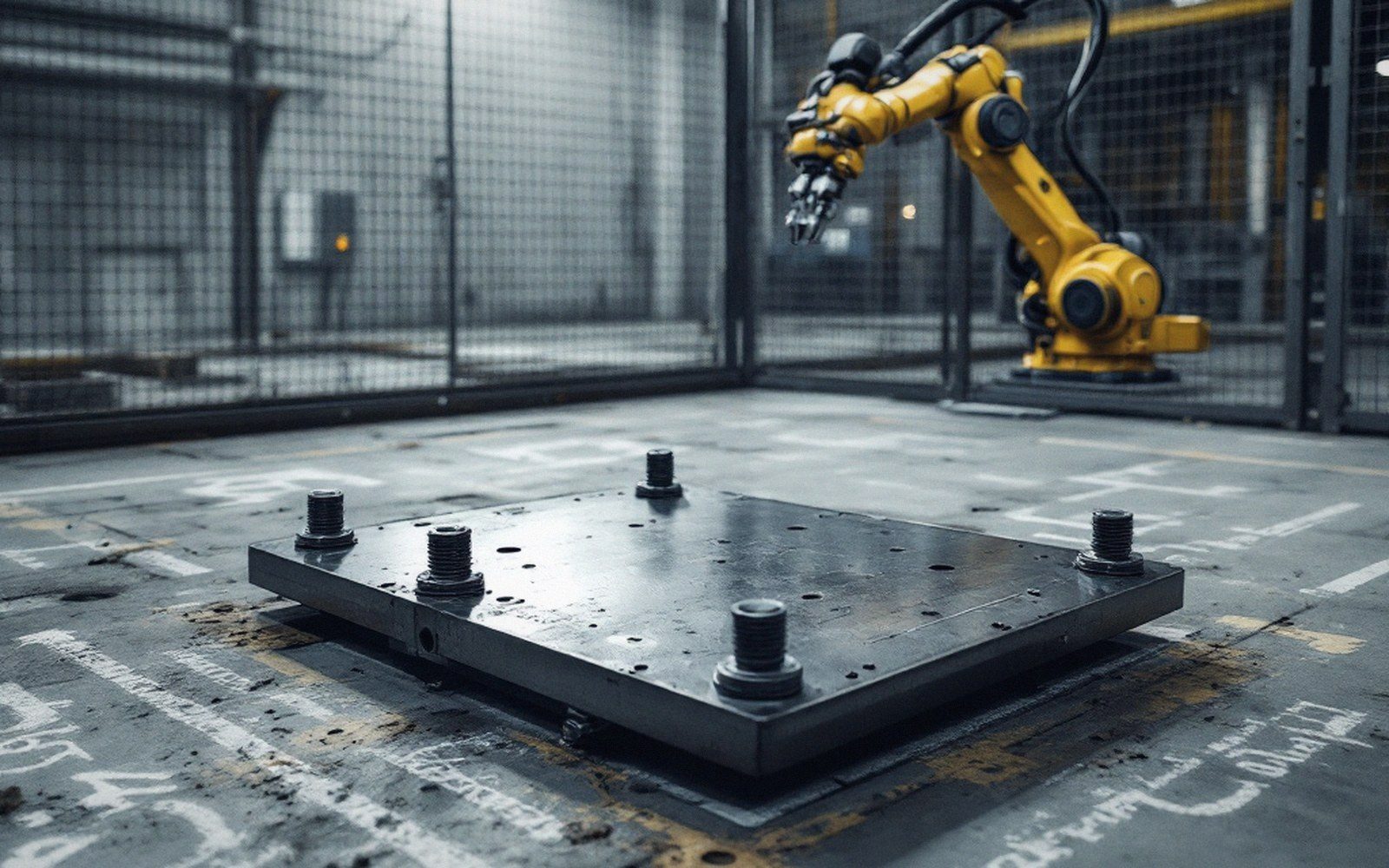
Every industrial robot arm carries a repeatability figure — typically expressed as ±0.02 mm to ±0.05 mm for a mid-sized six-axis arm. It is real. It was measured. But it was measured cold, unloaded, and at the rated speed the manufacturer chose, and each of those conditions quietly disqualifies it from describing what happens on your floor.
Cold means the arm had not been running long enough for its joints, gearboxes and structure to reach thermal equilibrium. Steel and aluminium expand as temperature rises, and a drive train that has been sitting overnight is a different machine from one that has been running for ninety minutes. The figure on the datasheet captures the former. Steel grows as the cell warms; the first hour of a shift is not the fourth, and the spec says nothing about either.
Unloaded — or more precisely, tested at a light reference payload well below the rated maximum — means the arm was not carrying what you will hang on the wrist. Mass at the end effector bends every link between the tool and the base. The heavier the load, the more the arm deflects under gravity, and that deflection is not uniform across the workspace. A gripper, a welding torch, a camera bracket: each shifts the effective tool centre point in ways the bare-arm figure does not include. Mass at the wrist bends the arm, and the real performance worsens as the load rises.
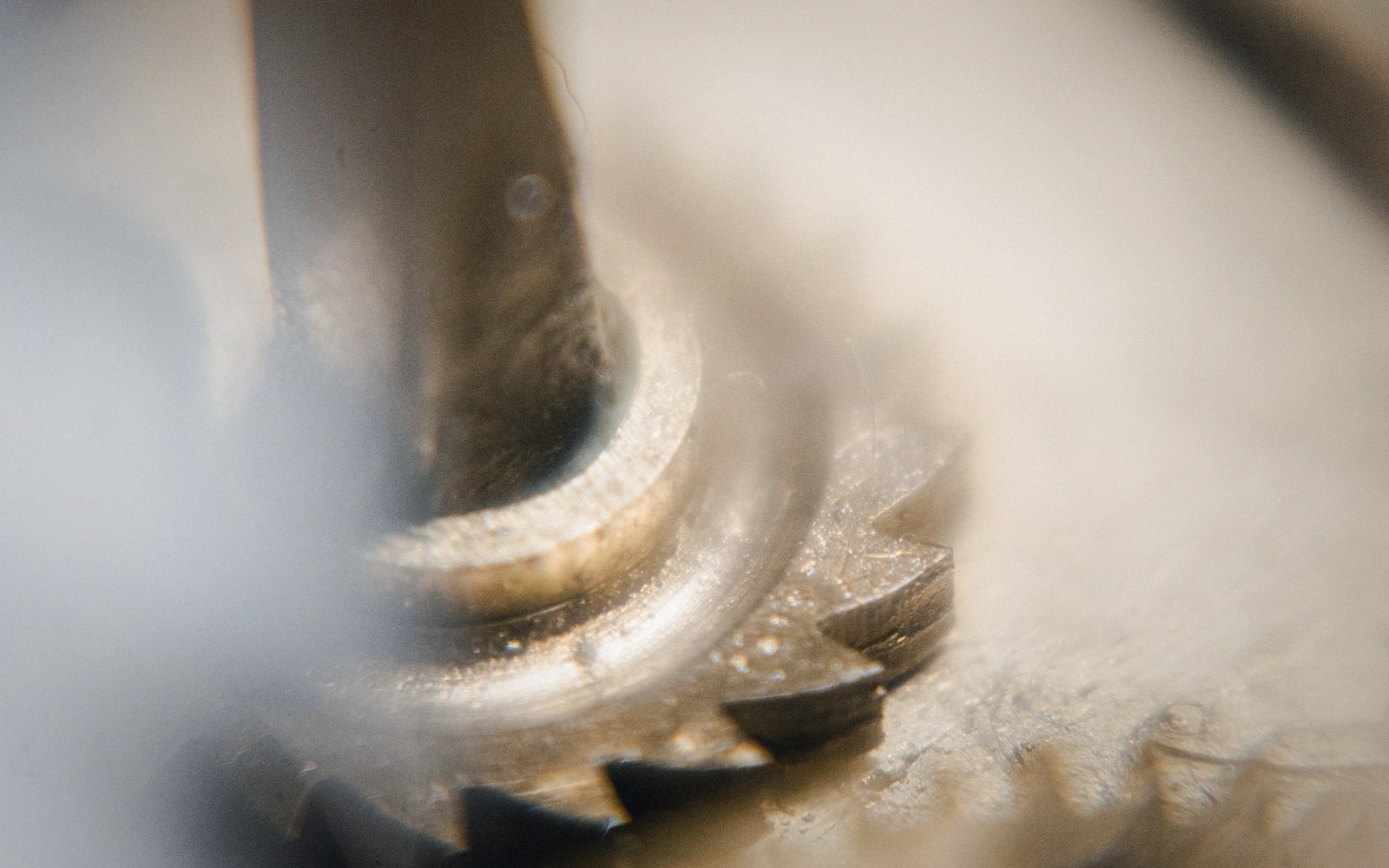
Speed matters because the test cycle is chosen to favour the figure. A simple, repeated move into a tight cluster of positions at the manufacturer's chosen speed is not the same as a production path with sharp direction changes. Inertia, compliance in the gearboxes, and the controller's settling behaviour all interact differently at working pace.
None of this is dishonest. Repeatability — returning to the same pose, under the same conditions — is a genuine and useful property. The problem is conflating it with accuracy, which is something else entirely: whether that pose is where you intended it to be. An arm quoted at ±0.03 mm will return to the same wrong place all day. The datasheet figure tells you the floor on positional consistency, measured under ideal conditions. It tells you nothing about drift over a shift, sag under load, or where in absolute space the arm actually lands.
Read the figure. Understand what it excludes. Then decide how much margin to build in.
Speed matters because the test cycle is chosen to favour the figure.