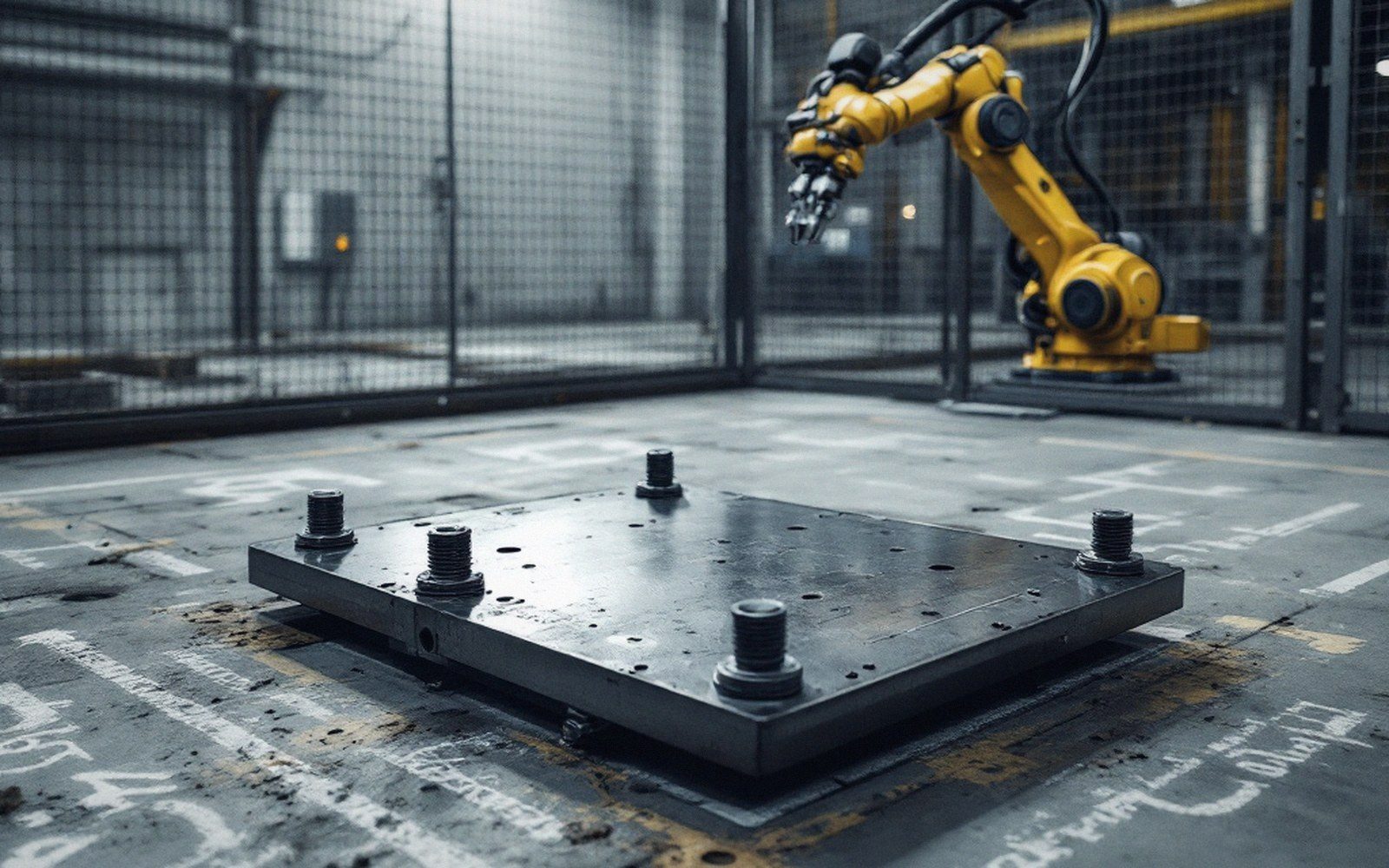
Payload and droop
The rated payload is a ceiling, not a constant. Hang more weight from the wrist and the arm bends; the heavier the load, the further the tool drifts from where the controller thinks it is.
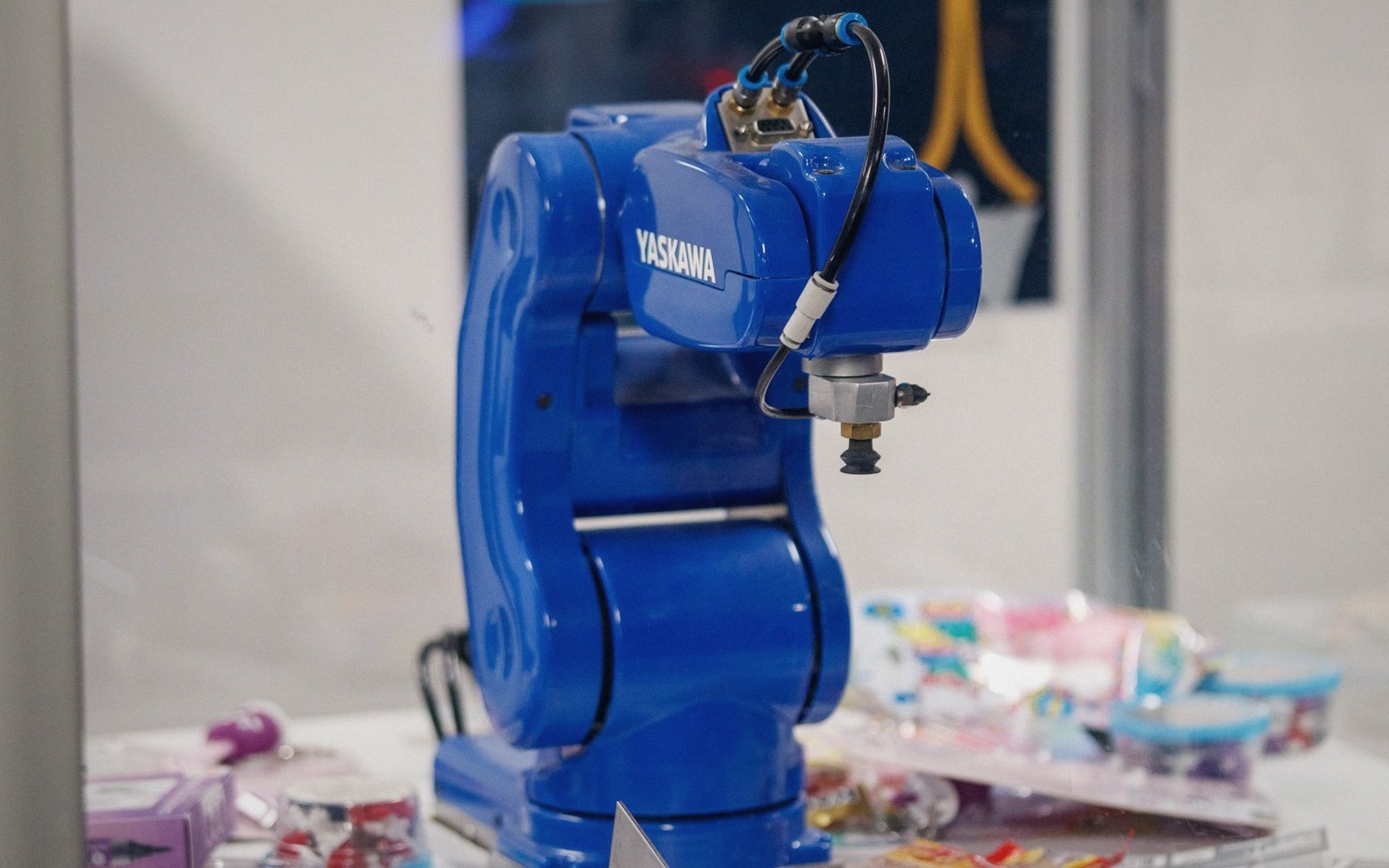
§ 1Mass deflects; the controller ignores it
Every joint in an arm is a lever. Put mass at the end and gravity tries to rotate each upstream joint downward. The gearboxes resist — reduction ratios are extreme, sometimes several hundred to one — but resistance is not rigidity. Steel flexes. Gear teeth compress slightly under load. The cumulative deflection at the tool centre point is small enough to ignore at light loads and large enough to matter at heavy ones.
The rated payload figure in a datasheet is the mass the arm can move without exceeding its rated torque at any joint. What it does not state is how much the arm droops under that load, or how that droop varies with reach and posture. An arm carrying its full rated payload fully extended horizontal — the worst-case lever arm — deflects far more than the same arm carrying the same mass close in, with joints near vertical. The geometry changes every millimetre of the path.
Controllers do not measure deflection directly. They know joint angles from encoders; they infer the tool position from kinematics. If the arm has bent, the inferred position is wrong by exactly that much. The error is systematic and repeatable — the arm will return to the same wrong place every cycle — but repeatability is not accuracy, and a repeatable error is still an error.
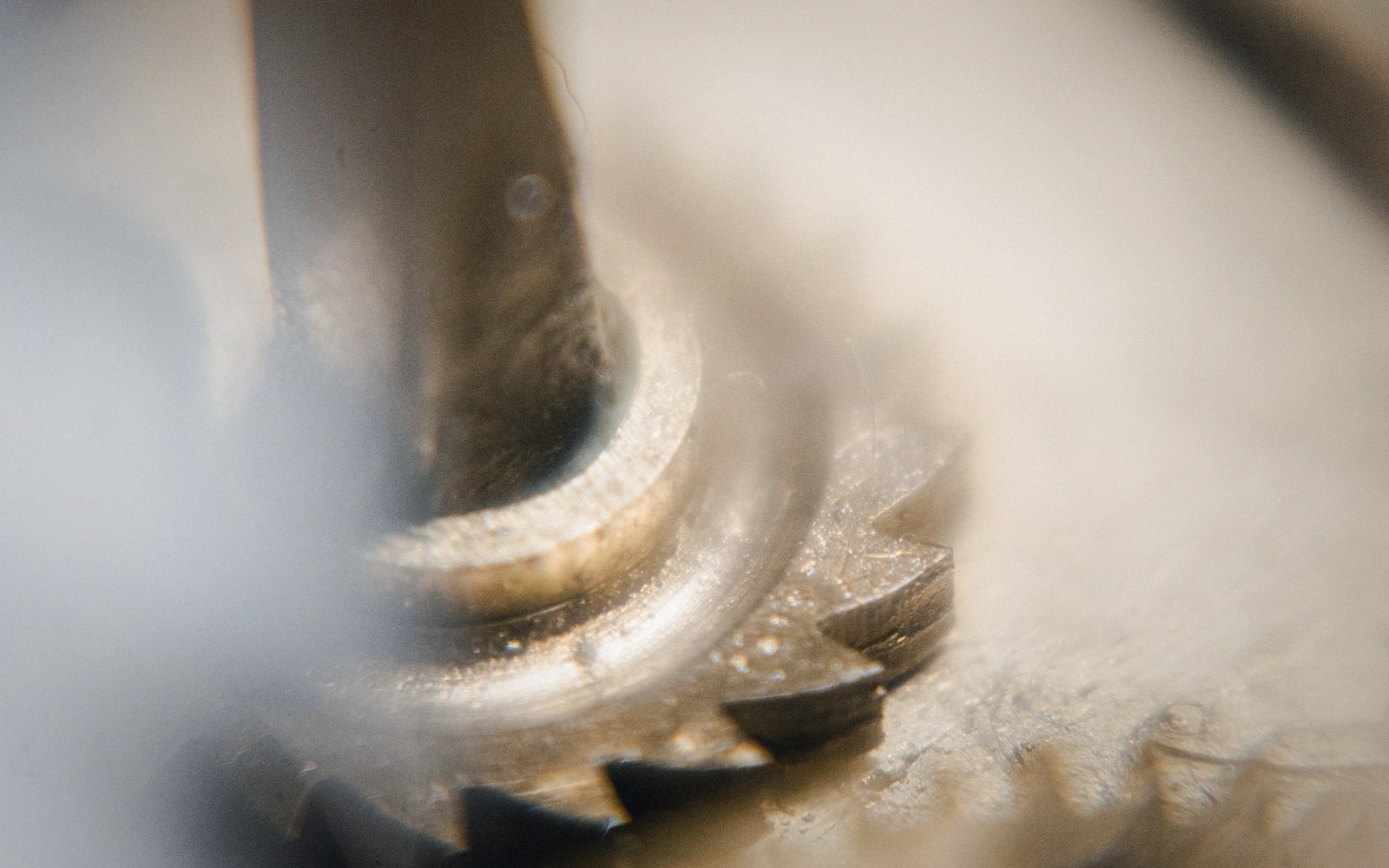
Tooling weight compounds the problem. The end effector is part of the payload, and a heavy gripper or vacuum manifold leaves less headroom for the part itself. Engineers who model payload often find that the hand alone consumes a third of the rated figure before the part is picked.
The practical discipline is conservative loading — treat the rated number as a ceiling and leave margin for posture, reach, and acceleration. Dynamic loads during rapid moves add inertial forces on top of gravity; at high accelerations these can briefly exceed static weight by a significant factor. The arm that handles the part comfortably at low speed may saturate a joint torque limit in full production.
The geometry changes every millimetre of the path.