§ 1The price of swapping hands mid-cycle
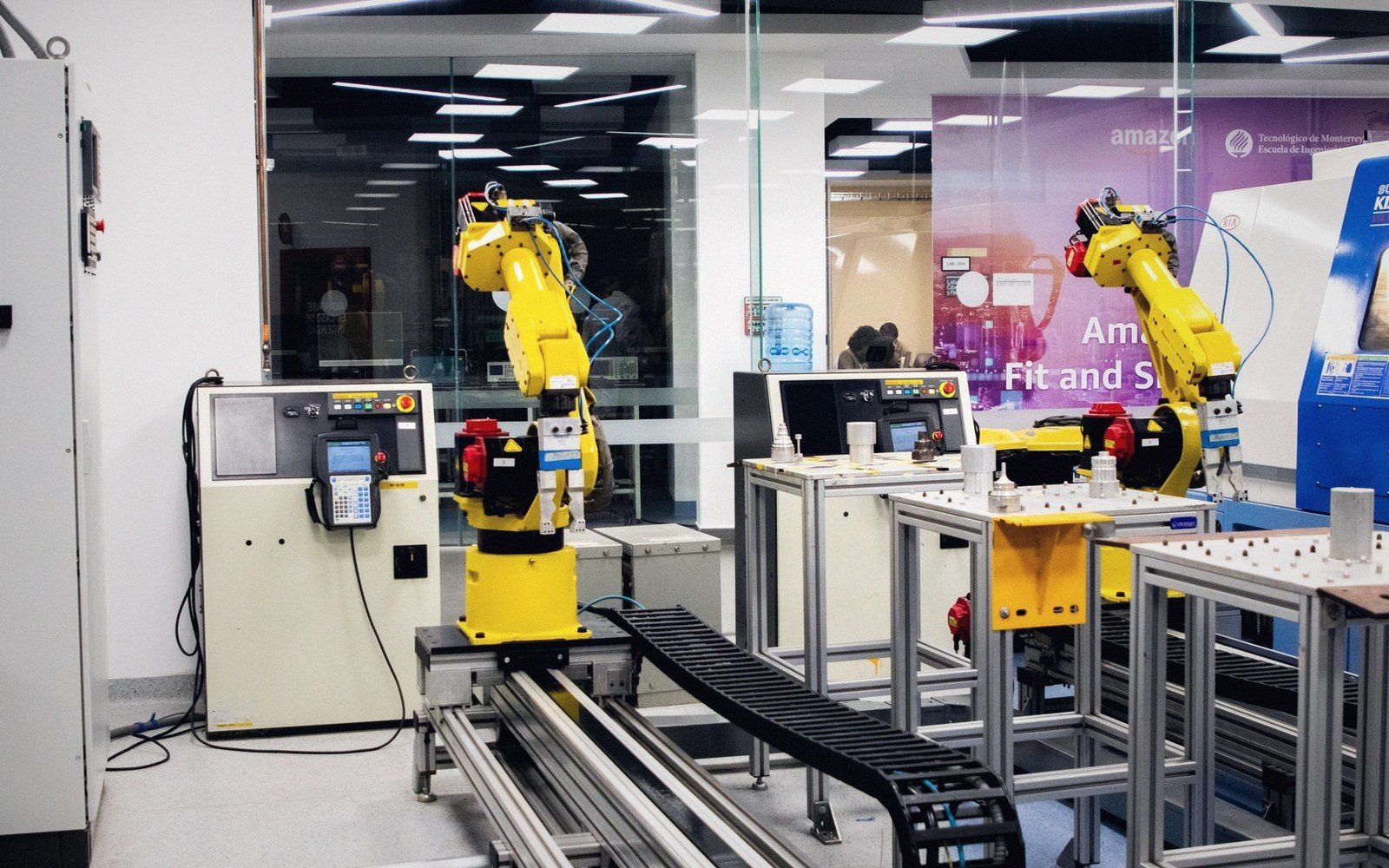
A robot arm can carry one tool at a time. When a cell needs more than one — a gripper for loading, a welding torch for joining, a camera for inspection — the options are to use multiple arms, multiple stations, or a single arm that swaps its own end effector. Automatic tool changers make the third option possible. They also introduce a coupling that sits directly in the load path, and that coupling has a repeatability budget of its own.
The mechanism is straightforward in principle: a master plate mounts permanently to the wrist; a tool plate mounts to each end effector; docking locks them together, usually with a pneumatic ring of ball-lock pins or a cam-action collet. Electrical, pneumatic and signal pass-throughs mate at the same time, so the controller sees the new tool as if nothing changed. Undocking reverses the sequence; the arm deposits the old tool on a stand and picks up the next.
What changes is the stack of tolerances. Every rigid coupling between motor and workpiece contributes to the arm's positional error, and a tool changer adds one more. A well-engineered master-tool interface will repeat to within a few micrometres across hundreds of thousands of cycles — better than the arm's own wrist repeatability in many cases. But that figure is a clean-room number: it assumes a debris-free mating face, consistent pneumatic pressure, and a locking cycle completed fully. A worn or contaminated interface couples the two plates unevenly, and the tool sits at a slightly different angle every time. Unlike a fixed wrist, there is no easy way to detect this from inside the controller.
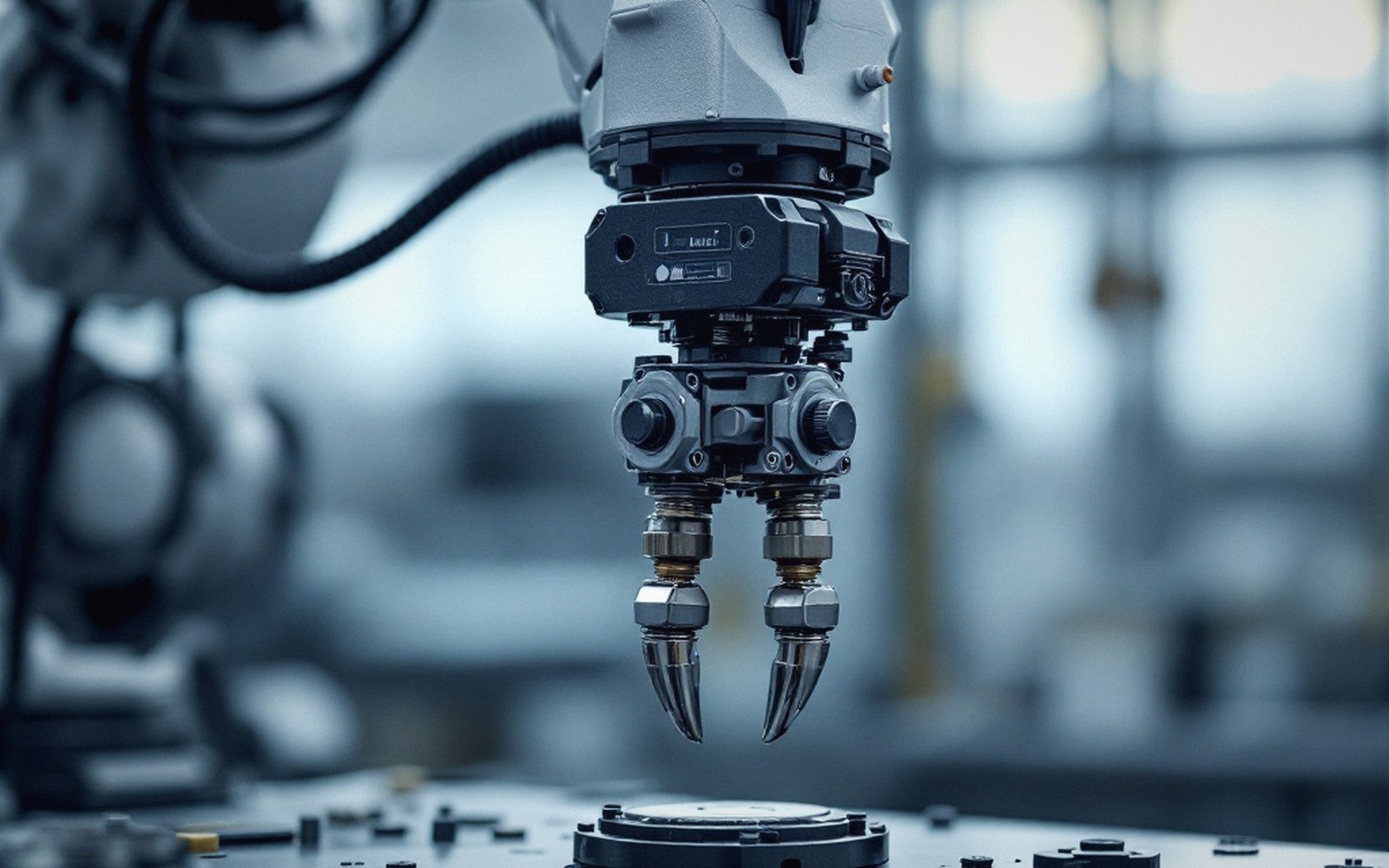
The tool centre point becomes the immediate casualty. Because the TCP is defined relative to the flange, any micro-rotation or micro-shift at the changer translates directly into a positional error at the tip — magnified by the distance from flange to tool tip. A long welding torch amplifies changer error far more than a compact gripper does. Programs that were taught with the tool in place must account for this: if the changer does not land the tool in exactly the same pose each time, the taught path drifts.
Maintenance intervals for the mating faces and the locking mechanism are therefore not optional housekeeping — they govern whether the repeatability the arm was specified for survives into the cell. A tool changer that cycles hundreds of times per shift accumulates contact wear faster than the arm's joints do. Checking locking pressure, cleaning mating faces, and retiring worn plates before tolerance stack-up compounds is the practical discipline that keeps a multi-tool cell behaving like a single-tool one.
A long welding torch amplifies changer error far more than a compact gripper does.