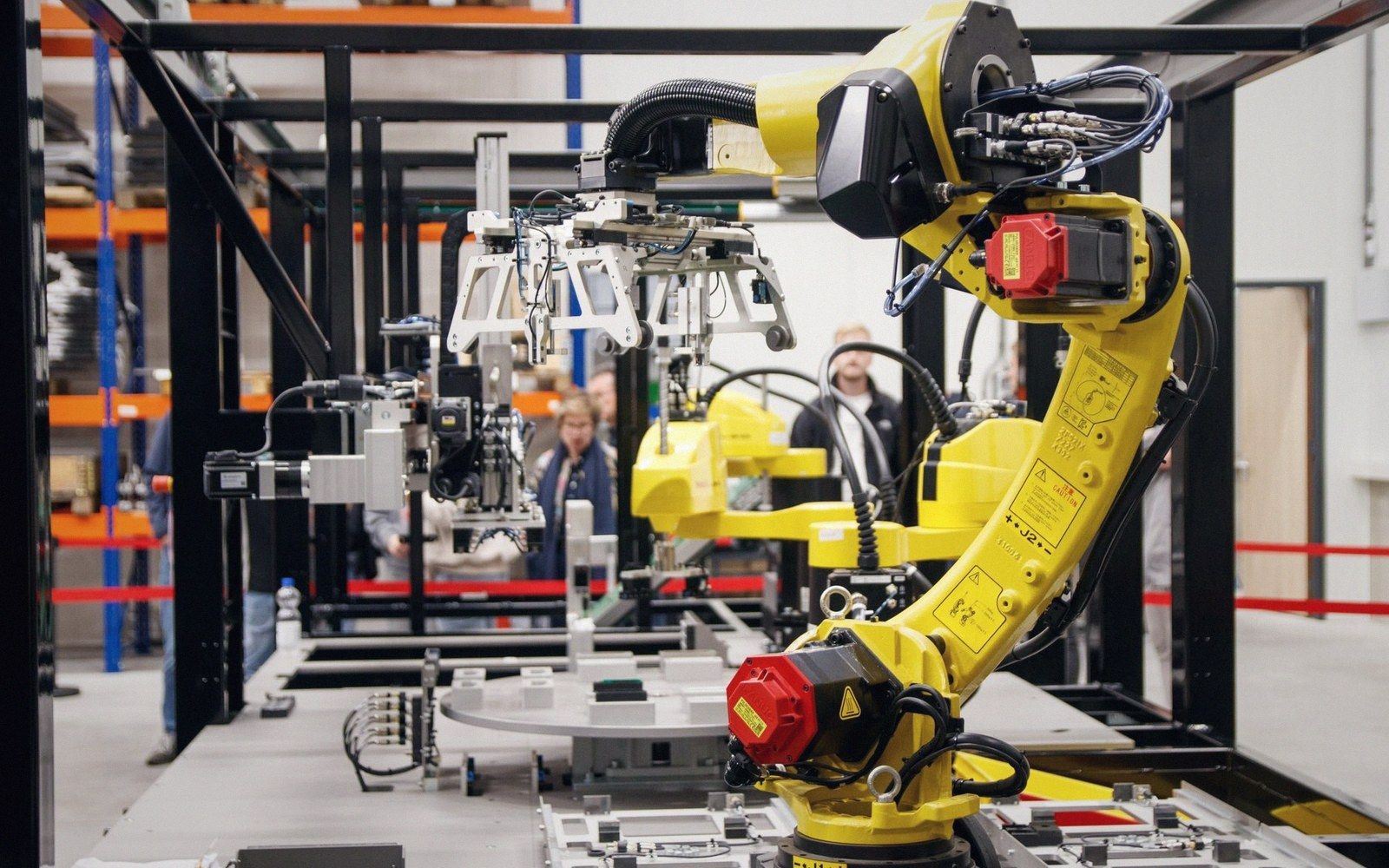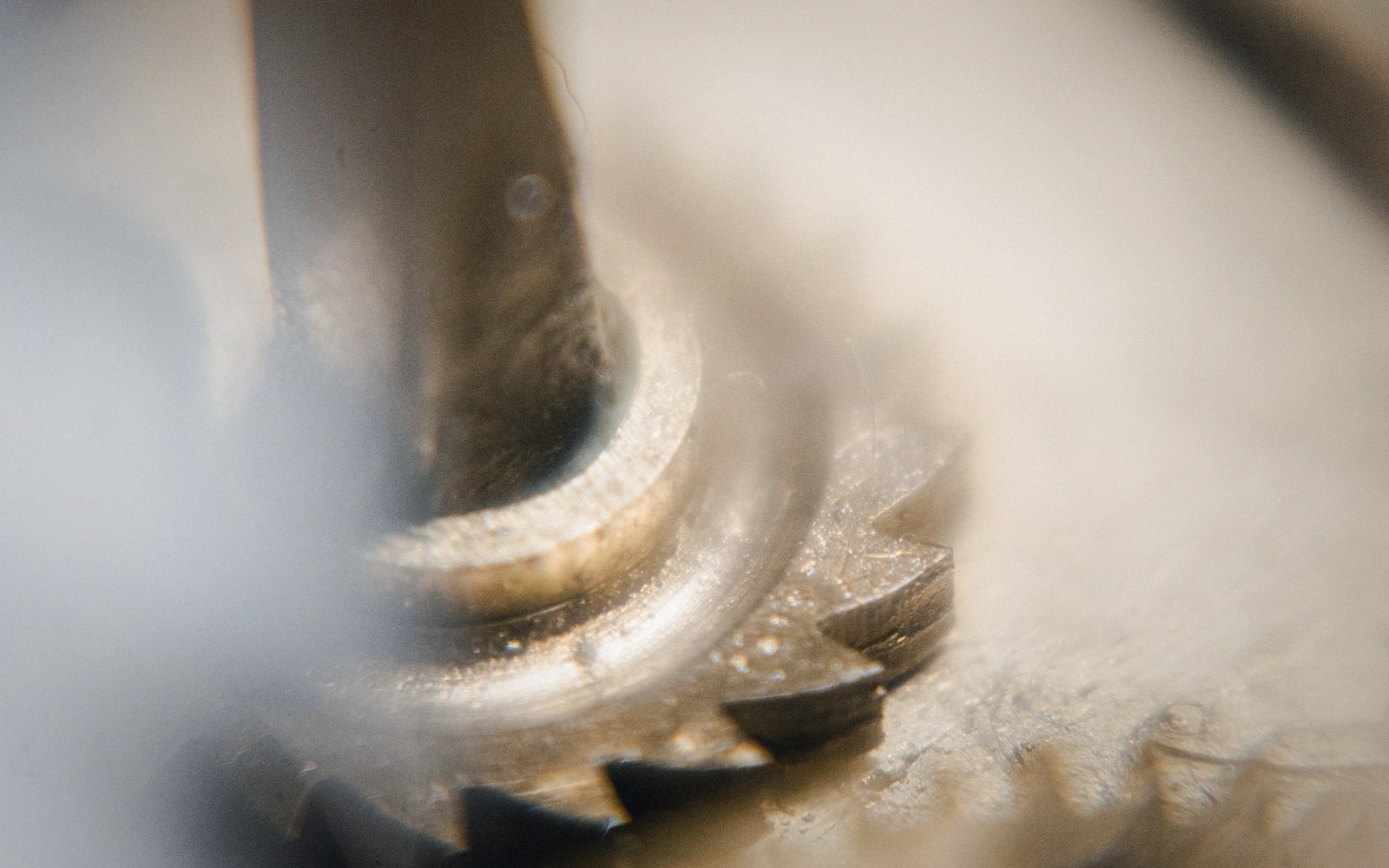
§ 1The price of reduction
A servo motor spins fast and produces modest torque. A robot joint must move slowly and hold enormous loads. The gap between those two realities is bridged by a reduction gearbox — and in a high-performance robot arm, the reduction ratio is not modest. Ratios of 100:1 or higher are common at the shoulder, where the motor might spin a hundred turns to rotate the joint a single turn.
Two gear types dominate the field. The harmonic drive — more precisely, a strain wave gear — uses a thin flexible spline deformed by a wave generator to mesh with a rigid outer ring. It achieves very high reduction in a compact, lightweight package with essentially zero measurable backlash, which is why it appears in almost every robot wrist and in many elbow joints. The cycloidal drive uses eccentric motion of a disc with lobed teeth engaging pins around its circumference; it is stiffer under shock loads and common at heavier joints.
Backlash is the angular slop that exists when a gear reverses direction and the teeth must travel a small free distance before they re-engage the load. In a standard industrial gearbox this might be a fraction of a degree — a number that sounds trivial until you multiply it by the arm length. A tenth of a degree of free play at the shoulder joint translates to several millimetres of positional error at the tool. That error is invisible to the joint encoder, which sits on the motor shaft, upstream of the gearbox. The controller believes the joint is positioned correctly because the motor is; it cannot see what the gearbox is doing to that certainty.
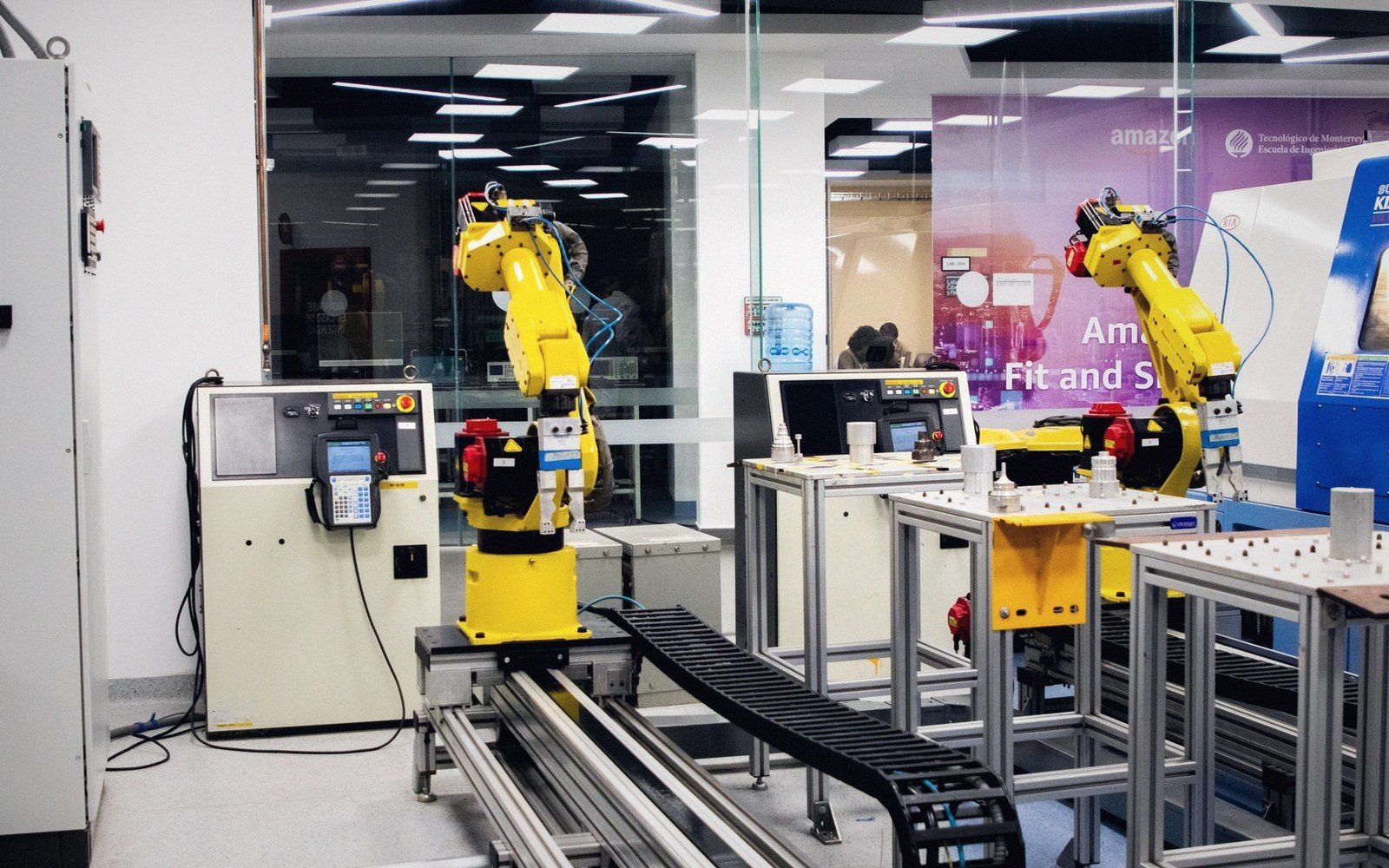
This is why the reduction ratios are so extreme: high reduction is not only about torque multiplication. A gearbox at 160:1 means that the motor must turn 160 times to produce one full joint revolution, so any angular error on the motor side — a single encoder count, or play near the input of the gear train — is divided by 160 by the time it reaches the output. The encoder resolution, which is genuinely high, becomes even finer when measured at the joint. The gearbox is doing double duty: trading speed for torque, and refining motor-side positioning. It does not shrink play at the output end of the gear train, though; that play reaches the joint at full size, and the motor-side encoder still cannot see it.
Wear changes this picture. Harmonic drive flexsplines fatigue over time; cycloidal pins and discs wear at contact surfaces. Both allow more play as the hours accumulate, and that repeatability figure quoted at commissioning becomes quietly optimistic. A well-maintained arm logs gearbox hours and watches for rising following error — the gap between where the controller expects the joint to be and where it actually arrives — as an early warning that the reduction stage is no longer doing its job cleanly.
A robot joint must move slowly and hold enormous loads.