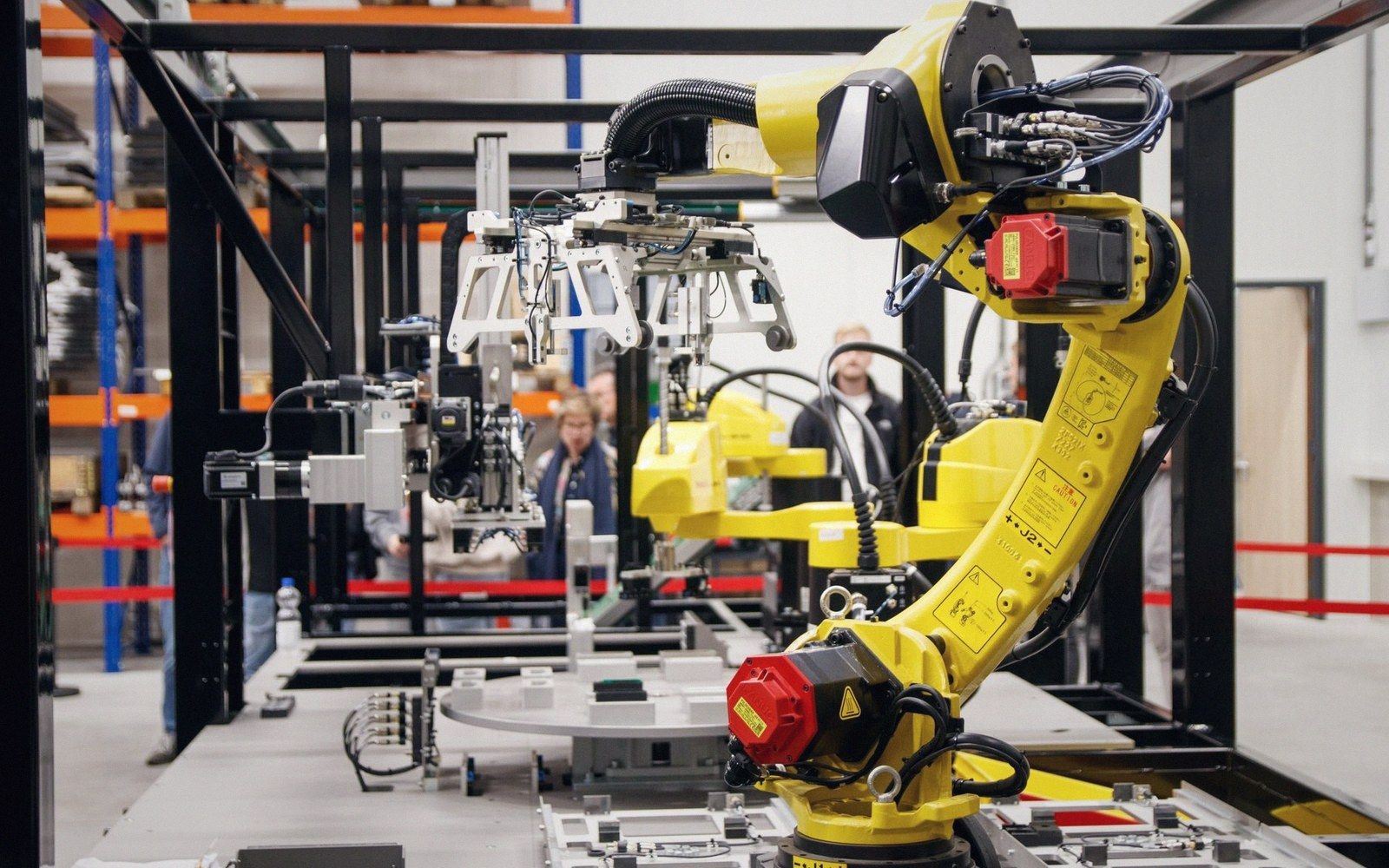
The shoulder carries
Three joints get the wrist to its address. The other three decide how it arrives.
§ 1The work of the first three axes
A six-axis arm is not one machine — it is two telescoped inside each other. The innermost three joints, roughly the base rotation, the shoulder and the elbow, form a positioning structure. Their only job is to carry the wrist to a point in space. Get those three angles right and the wrist centre sits where it needs to sit; the question of which way the tool is pointing has not been answered yet.
That division is not a design choice so much as a geometric inevitability. Three degrees of freedom are the minimum needed to reach any point in a volume, and the first three joints spend all of them on position. Three to place a point anywhere in reach, three more to arrive at any angle — the arithmetic is exact and unforgiving.
The shoulder joint carries the greatest burden. It must move the full weight of everything outboard of it: the elbow, the forearm, the wrist assembly and the end effector with whatever it is holding. Moment arm matters here. A modest payload at the tool tip translates into a substantial torque at the shoulder, which is why the gear reduction at that joint is among the most extreme in the arm and why the brake at the shoulder is the one that genuinely matters if power disappears unexpectedly.
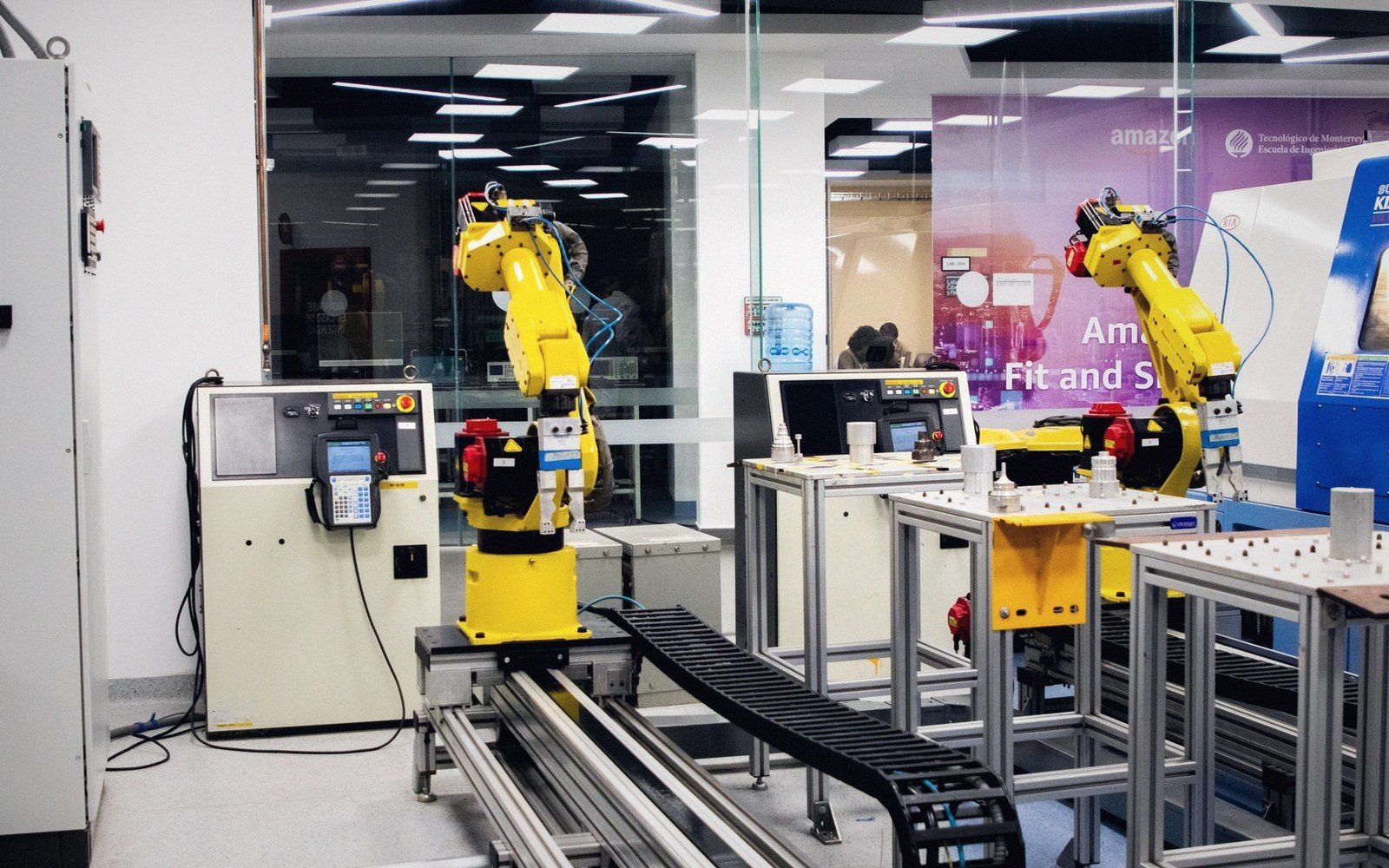
The elbow, positioned at mid-arm, controls reach — folding the arm in to work close, extending it to work far. The range of motion available there largely determines the depth of the working envelope, and the elbow joint is where the classic reach-versus-clearance trade-off is most visible: a longer forearm reaches further but cannot fold back without fouling the base or the fixture.
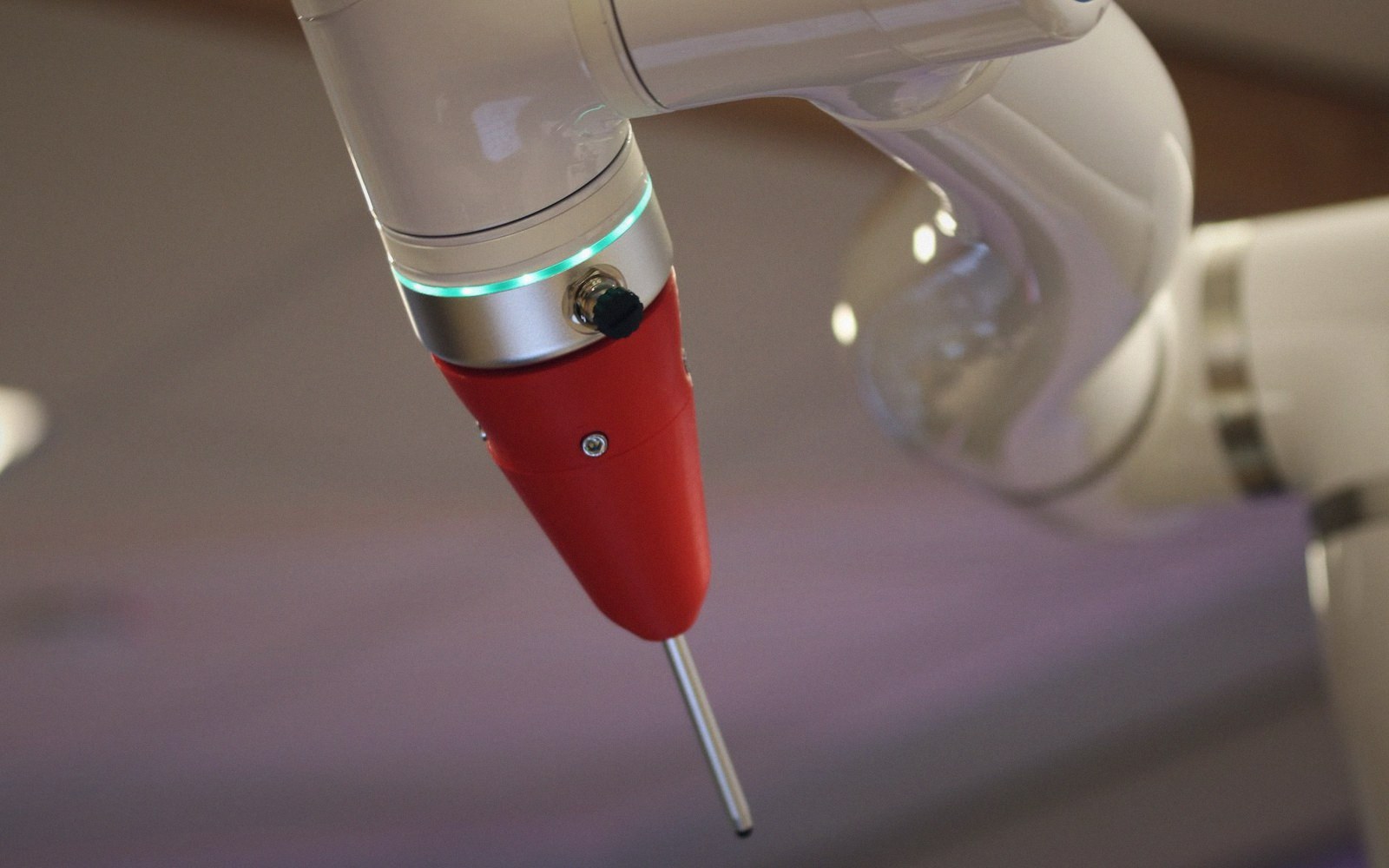
Once those first three joints have placed the wrist centre, they hand off entirely. The wrist's three axes — roll, pitch and roll again — handle orientation without moving that centre point. The shoulder positions. The wrist aims. The boundary between them is what makes the kinematics tractable.
Their only job is to carry the wrist to a point in space.