§ 1When the power stops, gravity does not
A robot arm at rest looks passive. It is not. Every joint that holds a load against gravity is doing continuous work, and the moment power stops — whether from an emergency stop, a fault or a planned shutdown — something else must take over immediately or the arm falls.
The answer is a brake. Not a motor brake in the automotive sense, but a spring-applied, power-released electromagnetic device fitted to each driven axis. The default state is on. When the controller energises the brake coil, a magnetic field compresses the spring and lifts the friction plate clear of the rotor, freeing the joint to move. Cut the power and the spring clamps down automatically. This fail-safe logic is deliberate: any failure in the supply — a broken wire, a blown fuse, a dropped voltage — tightens the brake rather than releasing it.
Not every axis carries equal weight. The large base rotation and the shoulder and elbow joints hold the bulk of the arm and its payload; their brakes are correspondingly substantial. The three wrist axes, closer to the tool, see far less gravitational load and carry smaller brake assemblies. The holding torque at each joint is sized to exceed the worst-case gravitational torque at that joint — which depends on payload, arm configuration and reach. The payload and droop a loaded arm experiences under gravity is exactly what the brakes must resist when stopped.
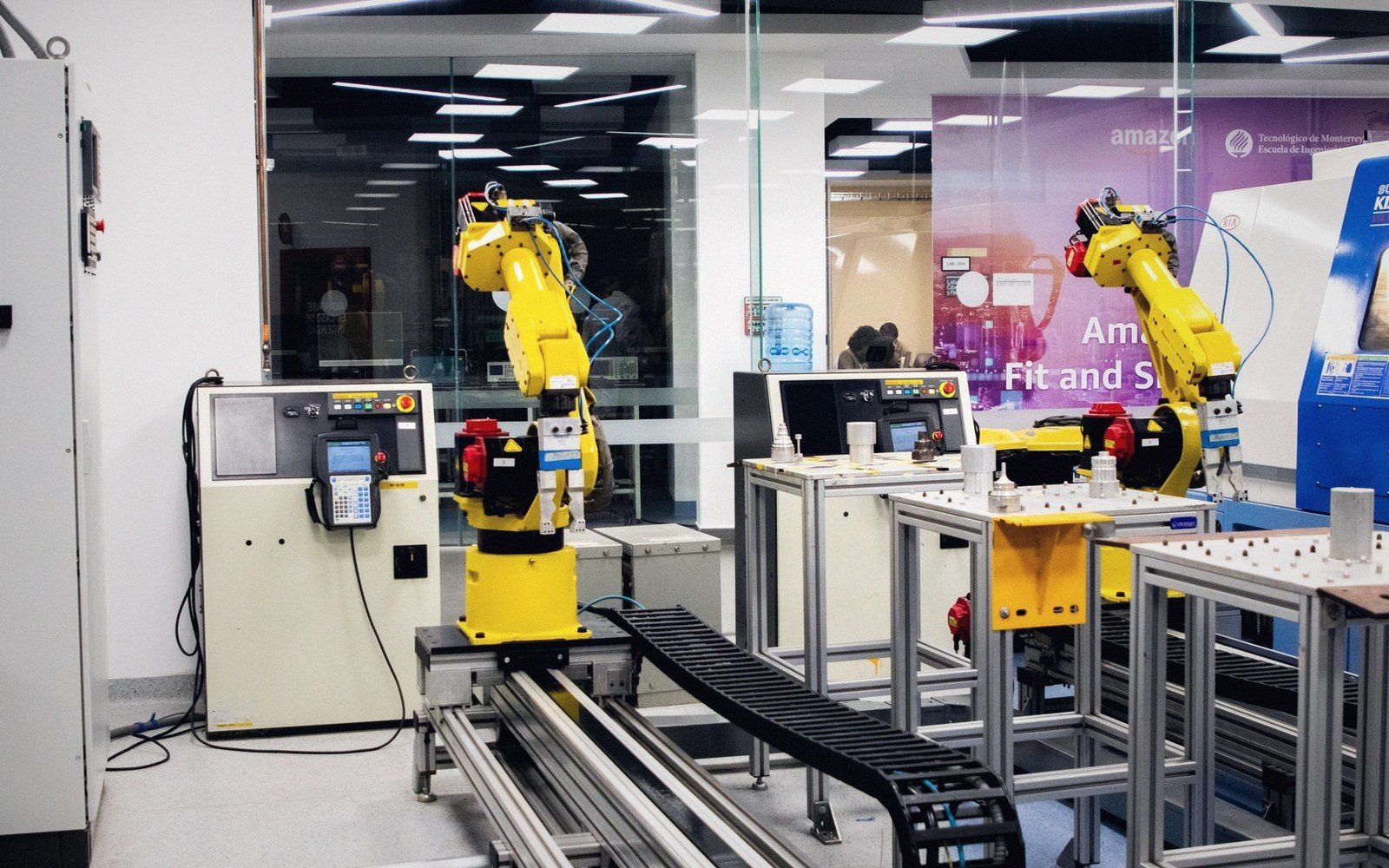
Brakes are not intended for active motion control. They are not applied and released mid-move to regulate speed; that is the motor's job. Using a brake as a dynamic stop — clamping it while the joint is still moving — generates heat, wears the friction surfaces and degrades holding torque over time. Maintenance schedules exist because brake wear is real and cumulative, and a joint that drifts downward after a stop is a joint whose brake needs attention.
One consequence follows from the fail-safe principle: releasing the brakes for manual arm movement requires a deliberate action at the teach pendant. Power must be applied to the brake coil specifically, often axis by axis, before the joint will turn freely. The arm does not coast; it stands until you tell it otherwise.
Cut the power and the spring clamps down automatically.