What a cycle time hides
The number on the datasheet is the move. Everything that happens before and after it is yours to discover.
§ 1The move is the easy part
When an integrator quotes a cycle time, they are measuring the robot's motion from trigger to completion — the arc of the arm, the dwell at the weld or the pick, the return. That number is real. It is also the smallest part of what determines how many parts come off the line each hour.
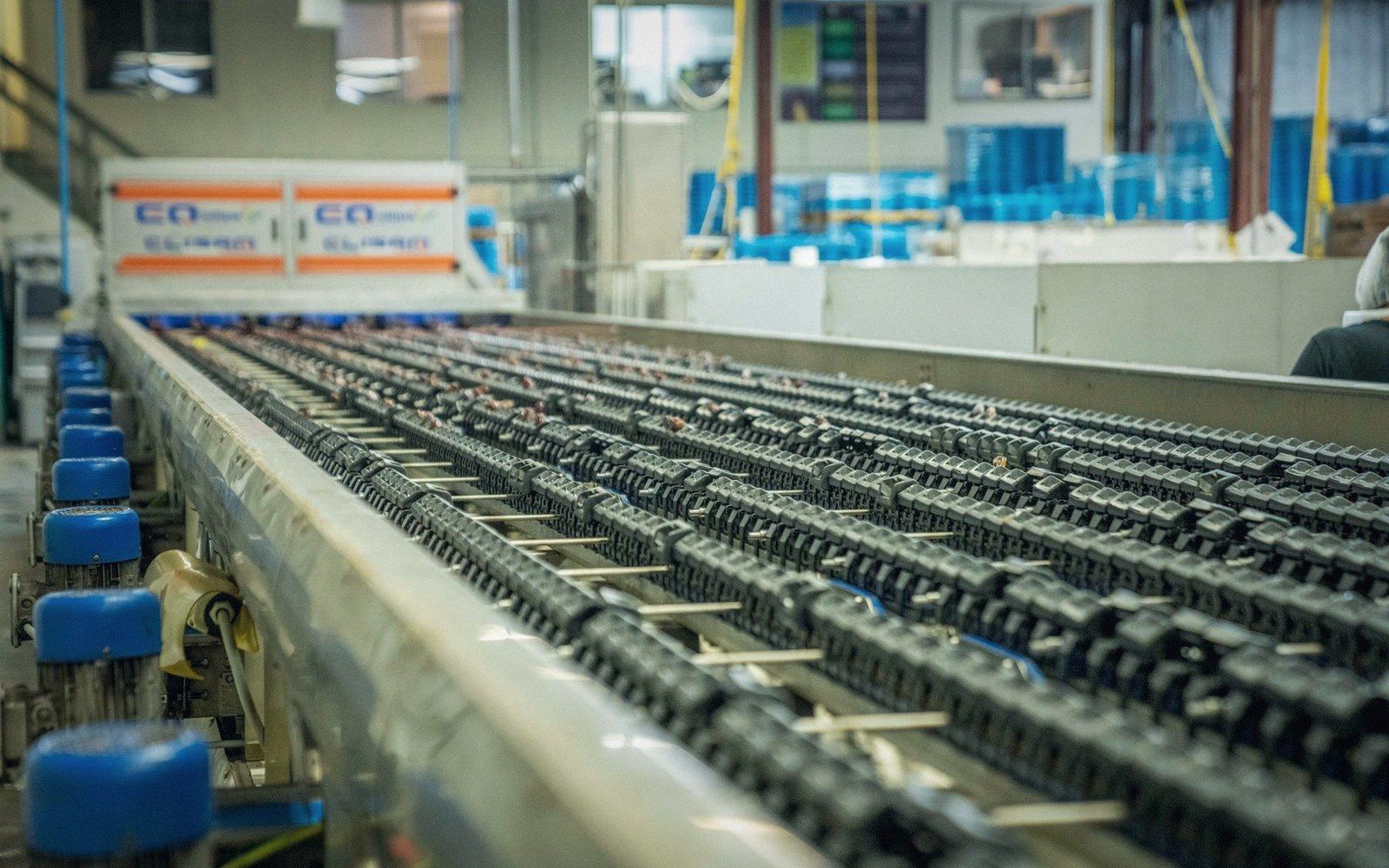
Everything else is indexing time: the conveyor advancing, the fixture rotating, the clamp closing, the part-present sensor confirming. None of that is in the motion quote. A robot that completes its move in 4.2 seconds and then waits 1.8 seconds for a pallet indexer to settle is not a 4.2-second cycle. It is a six-second cycle, and the difference is a 30 percent gap between the number you were shown and the throughput you get.
Then there is the part that did not arrive. Vision systems and part-present sensors add their own latency — image capture, processing, decision — before the robot is even released to move. If a part arrives slightly late or slightly skewed and requires a second grab, the cycle time for that occurrence is not the quoted figure; it is the quoted figure plus recovery time. Recovery paths are rarely included in a demonstration, because demonstrations use good parts, correctly presented, every time.
§ 2What the number assumes
A quoted cycle time is almost always a steady-state figure: the arm already at its home pose, the fixture already loaded and clamped, the previous part already clear. The first cycle of a batch — and every cycle after a fault clearance — starts from a different arm position, which means a longer first move. On short production runs, the startup penalty can be significant relative to the quoted rate.
Downstream matters too. A robot cycling in 4 seconds feeding a process that accepts parts every 6 seconds is not producing more; it is building a buffer until something upstream blocks it. Cycle time interacts with the whole cell, and the cell interacts with the line. A number taken in isolation tells you the speed of one arm on one path with ideal conditions and nothing waiting. Repeatability is not accuracy, and a cycle time quoted in isolation is not a production rate.
The useful question is not "what is your cycle time?" but "what is the yield per hour across a full shift, including faults, changeovers and startup?" That number is harder to get, harder to guarantee, and much closer to what the machine will actually do.
Cycle time interacts with the whole cell, and the cell interacts with the line.